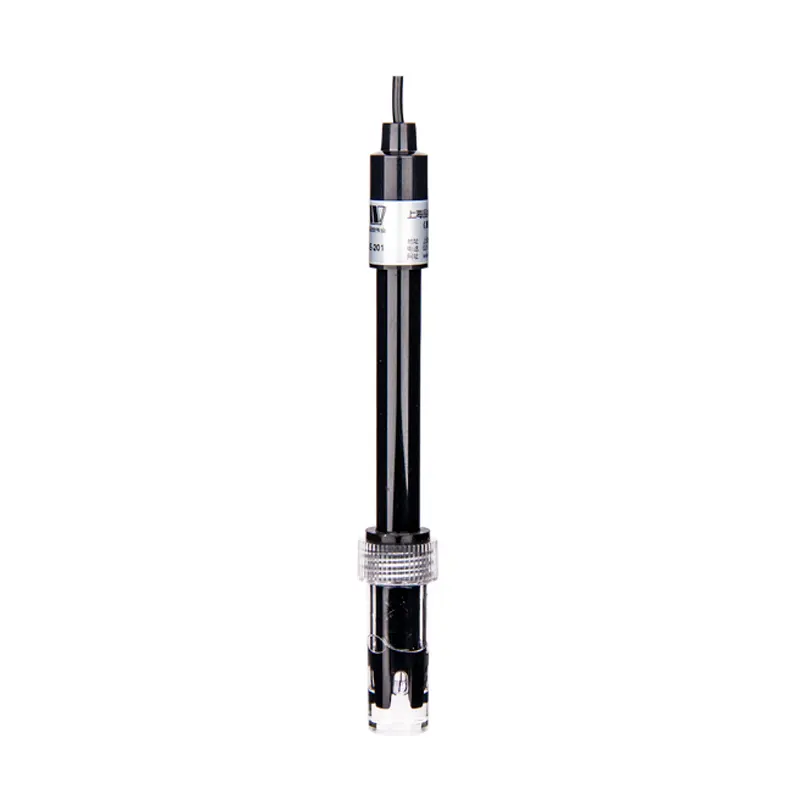
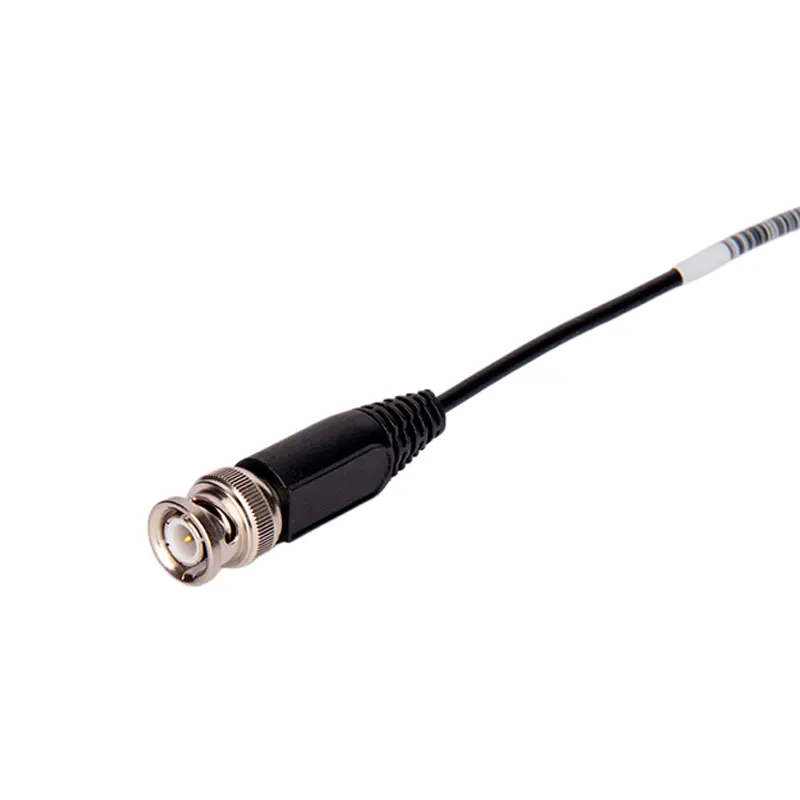
The E-201 is a sealed composite pH electrode with POM junction, pH range 0–14, accuracy 0.01 pH and temperature range 5–60°C. PC shaft, Φ12×120mm, BNC connector. A standard composite pH electrode for routine laboratory pH measurement.
The E-201 composite pH electrode is a reliable, general-purpose pH sensing electrode for routine laboratory measurement. Like the E-331D, it integrates both the pH-sensitive glass membrane and the Ag/AgCl reference electrode into a single composite body with a BNC connector — simplifying setup and eliminating the need for a separate reference electrode.
The E-201 uses a sealed reference system with a POM (polyoxymethylene) liquid junction. POM is a dense, low-porosity plastic material that produces a restricted, stable junction flow — well suited to clean aqueous samples where a slow, controlled junction is preferred. The electrode covers the standard 0–14 pH range with 0.01 pH accuracy across a temperature range of 5–60°C.
At Φ12×120mm, the E-201 has a slightly longer shaft than the E-331D (Φ12×105mm), which can be advantageous when measuring in deeper sample vessels. The BNC connector provides compatibility with all Skill Scientific pH meters and most other laboratory pH instruments.
The E-201 is a practical replacement or secondary electrode option for laboratories requiring a standard sealed composite electrode for general-purpose aqueous pH measurement.
| Model | E-201 |
| Description | pH Composite Electrode |
| pH Range | 0 – 14 |
| Accuracy | 0.01 pH |
| Shaft Material | PC (Polycarbonate) |
| Reference System | Sealed |
| Junction Type | POM |
| Temperature Range | 5 – 60°C |
| Dimensions | Φ12 × 120 mm |
| Connector | BNC |
Both are sealed composite pH electrodes with the same pH range and accuracy. The main differences are junction type, temperature range and dimensions. The E-201 uses a POM junction and covers 5–60°C; the E-331D uses a fiber junction and covers 0–80°C. POM junctions are well suited to clean aqueous samples in standard laboratory conditions. Fiber junctions provide faster response and are more resistant to clogging with complex samples or samples containing suspended solids. The E-331D is the standard supplied electrode for Skill Scientific pH meters; the E-201 is a suitable alternative for routine clean-sample laboratory work within the 5–60°C range.
POM (polyoxymethylene, also called acetal or Delrin) is a dense plastic material used to form the liquid junction between the reference electrolyte and the sample. A POM junction produces a slow, restricted, stable electrolyte flow — minimising contamination of the sample by reference electrolyte and providing a stable junction potential in clean aqueous samples. It is most appropriate for standard laboratory samples such as water quality testing, buffer solutions and general chemical analysis. For samples containing proteins, colloids, suspended solids or highly viscous matrices, a fiber junction electrode such as the E-331D is more suitable.
The E-201 uses a sealed reference system, while the E-201-C is a refillable composite electrode filled with 3.0 mol/L KCl. Refillable electrodes allow the reference electrolyte to be replenished when depleted or contaminated, potentially extending electrode service life in demanding applications. The E-201 is simpler to use with no maintenance refilling required; the E-201-C is preferred for applications involving samples that may deplete or contaminate the reference junction more rapidly.
For short-term storage, keep the electrode tip immersed in pH 4.00 buffer solution or 3 mol/L KCl. Never store in distilled or deionised water. For longer periods, use the protective cap with a small amount of storage solution inside. Before use after storage, allow the electrode to equilibrate in buffer solution for 5–10 minutes before calibrating to ensure stable readings.
Yes. The E-201 uses a standard BNC connector and meets standard composite pH electrode specifications. It is compatible with most laboratory pH meters from all major manufacturers that accept standard BNC composite pH electrodes.
Before You Go — Get a Free Quote