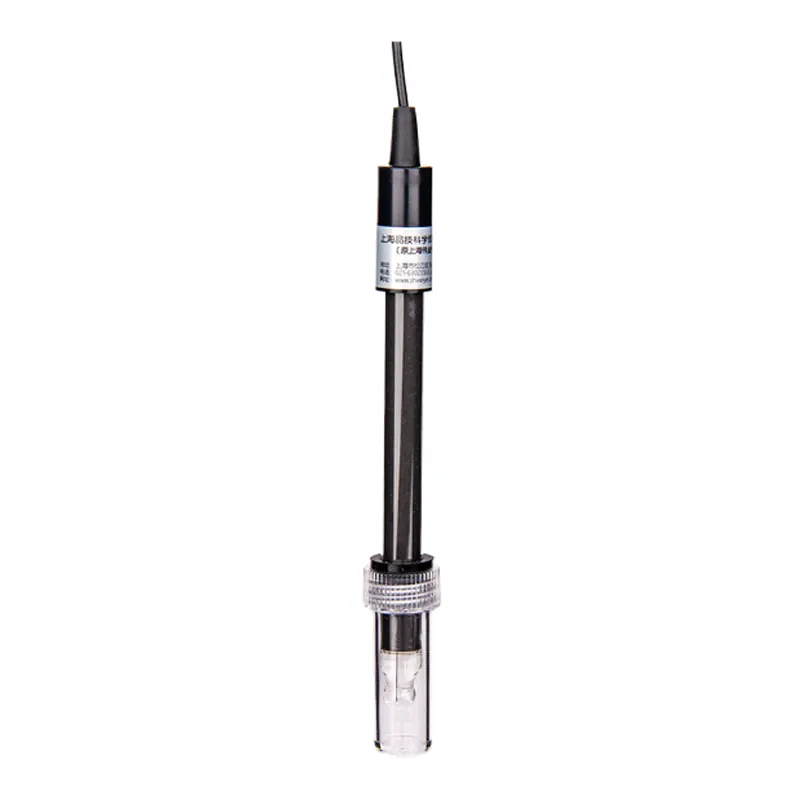
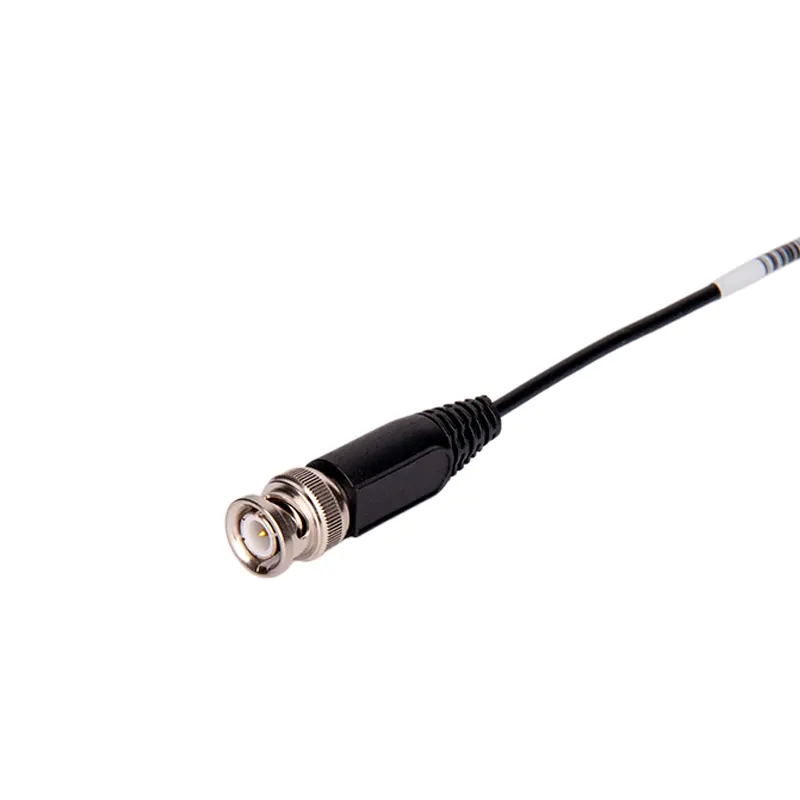
The 6801 is a zero-potential sodium ion indicator electrode with glass shaft, measuring range 10⁻¹ to 10⁻⁶ mol/L Na⁺ across a temperature range of 20–40°C. Dimensions Φ12×120mm, BNC connector. Must be used with a compatible reference electrode.
The 6801 sodium ion indicator electrode is a potentiometric half-cell electrode designed for accurate measurement of sodium ion (Na⁺) concentration in aqueous solutions. Built around a sodium-sensitive glass membrane, it develops a potential proportional to the logarithm of sodium ion activity in the sample — this signal is read by a connected ion meter and converted to pNa value or Na⁺ concentration.
The 6801 is a zero-potential indicator electrode, meaning its asymmetry potential is designed to be as close to zero as possible, ensuring stable and repeatable measurements across calibration sessions. As a half-cell electrode, it requires a compatible reference electrode to complete the measurement circuit.
The glass shaft (Φ12×120mm) provides excellent chemical resistance in aqueous samples, and the BNC connector ensures compatibility with standard laboratory ion meters. The 20–40°C operating range makes it suited to controlled laboratory environments.
| Model | 6801 |
| Description | Sodium Ion Indicator Electrode (Zero Potential) |
| Measuring Range | 10⁻¹ ~ 10⁻⁶ mol/L |
| Temperature Range | 20 – 40°C |
| Shaft Material | Glass |
| Fill Solution | — |
| Dimensions | Φ12 × 120 mm |
| Connector | BNC |
No. The 6801 is an indicator electrode and must be used together with a compatible reference electrode to complete the electrochemical measurement circuit. Without a reference electrode, the ion meter cannot obtain a stable, measurable potential difference from the sample.
The 6801 is an indicator electrode that requires a separate reference electrode to function. The 701 is a sodium ion composite electrode that integrates both the sodium-sensitive measuring element and the reference system into a single body — simplifying setup and eliminating the need for a separate reference electrode. Choose the 6801 for traditional two-electrode configuration; choose the 701 for more convenient single-electrode operation.
Zero potential refers to the asymmetry potential of the electrode — the small residual potential present when both sides of the ion-selective membrane are in contact with identical solutions. In a zero-potential electrode, this value is designed to be as close to zero as possible, improving measurement stability and reducing calibration offset.
The 6801 is used for sodium ion measurement in power plant high-purity water monitoring (steam, condensate and boiler feed water), natural water and industrial wastewater analysis, university and research laboratory work, and petrochemical and microelectronics process water quality control.
Rinse the electrode tip with distilled water before and after each use. Store the electrode with the tip immersed in a low-concentration sodium ion standard solution — do not store in distilled water, which can affect glass membrane conditioning over time. If electrode response becomes slow or the calibration slope deteriorates, condition by soaking in sodium standard solution for several hours before recalibrating. Use and store within the 20–40°C operating temperature range.
Before You Go — Get a Free Quote