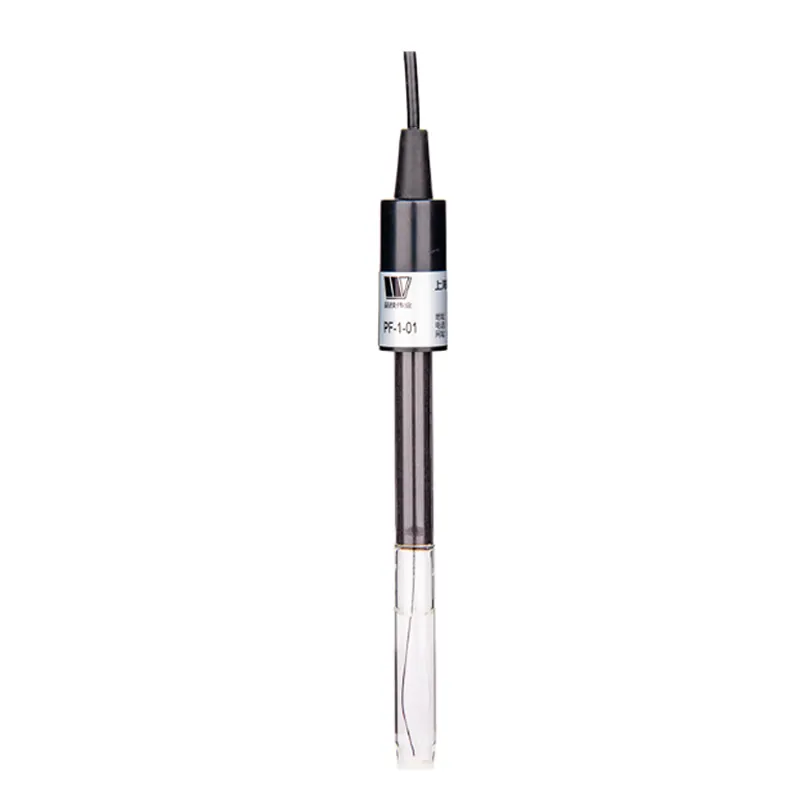
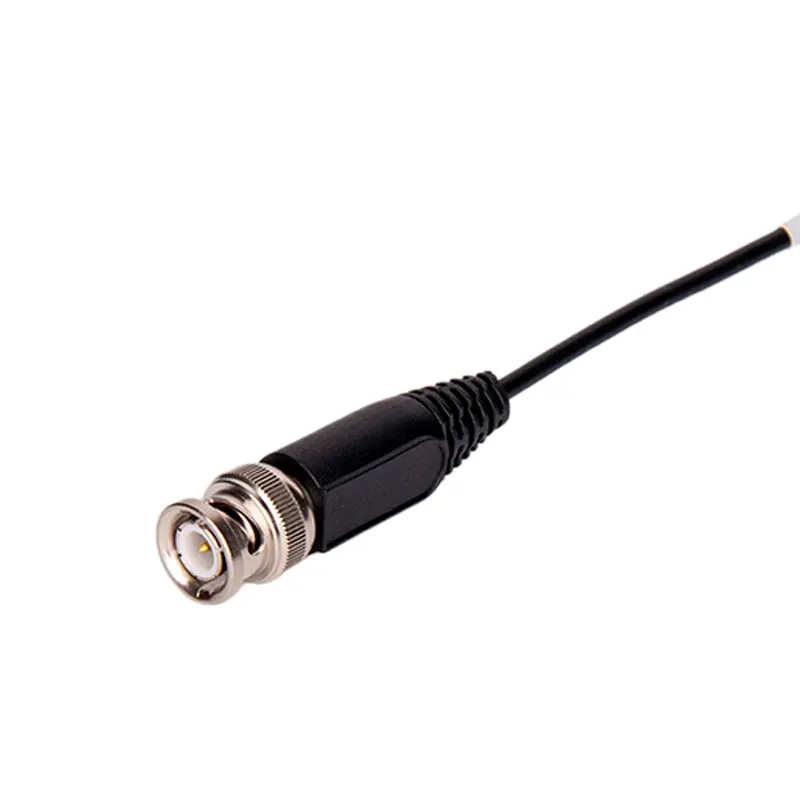
The PF-1-01 is a fluoride ion indicator electrode with lanthanum fluoride crystal membrane and glass shaft. Measuring range 10⁻¹ to 10⁻⁶ mol/L F⁻, temperature range 5–45°C. Dimensions Φ12×120mm, BNC connector. Must be used with a compatible reference electrode.
The PF-1-01 fluoride ion indicator electrode is a potentiometric half-cell electrode for accurate measurement of fluoride ion (F⁻) concentration in aqueous solutions. It uses a lanthanum fluoride (LaF₃) crystal membrane — the standard membrane material for fluoride ion selective electrodes — which develops a potential proportional to the logarithm of fluoride ion activity in the sample. This potential is measured by a connected ion meter in combination with a separate reference electrode.
As an indicator electrode, the PF-1-01 contains only the fluoride-sensitive measuring element without an integrated reference system. It must be paired with a compatible reference electrode to complete the electrochemical measurement circuit. This two-electrode configuration is preferred in certain laboratory protocols where independent control of the reference electrode is required, or where the reference electrode needs to be replaced or changed separately.
The lanthanum fluoride crystal membrane requires no fill solution, making the PF-1-01 a low-maintenance electrode with no refilling requirements. The glass shaft (Φ12×120mm) provides excellent chemical resistance, and the BNC connector ensures compatibility with standard ion meters.
| Model | PF-1-01 |
| Description | Fluoride Ion Indicator Electrode |
| Measuring Range | 10⁻¹ ~ 10⁻⁶ mol/L |
| Temperature Range | 5 – 45°C |
| Shaft Material | Glass |
| Fill Solution | — |
| Dimensions | Φ12 × 120 mm |
| Connector | BNC |
The PF-1-01 is an indicator electrode (half-cell) — it contains only the fluoride-sensitive lanthanum fluoride measuring element and requires a separate reference electrode to function. The PF-1 is a composite electrode that integrates both the fluoride-sensitive element and the reference system in one body, requiring no additional reference electrode. Both share the same measuring range (10⁻¹ to 10⁻⁶ mol/L), temperature range (5–45°C) and glass shaft dimensions (Φ12×120mm). Choose the PF-1-01 for two-electrode configurations where independent control of each electrode is needed; choose the PF-1 for convenient single-electrode routine measurement.
The PF-1-01 uses a solid-state lanthanum fluoride (LaF₃) crystal membrane, which does not require a liquid electrolyte on the sensing side. The crystal membrane itself provides the ion-selective interface between the electrode and the sample. This makes the PF-1-01 simple to use and maintain — there is no internal fill solution to replenish or monitor.
TISAB (Total Ionic Strength Adjustment Buffer) is strongly recommended for accurate fluoride measurement. It adjusts the sample ionic strength to match calibration standards, buffers the pH to the 5–6 range where fluoride measurement is most accurate and hydroxide interference is minimised, and breaks complexes between fluoride and aluminium or iron that would otherwise cause falsely low readings. Add TISAB to both calibration standards and samples in equal proportion before measurement.
The PF-1-01 is used for fluoride measurement in drinking water and environmental compliance testing, food and beverage safety analysis, pharmaceutical fluoride content determination, agricultural soil and irrigation water monitoring, industrial process water and wastewater quality control, and chemical industry applications requiring precise fluoride ion quantification.
Rinse the electrode tip with distilled water before and after each measurement session. Store dry — the lanthanum fluoride crystal membrane does not require immersion in solution between uses, though short-term storage in a dilute fluoride standard solution is acceptable. If the electrode response becomes slow or the calibration slope deteriorates, soak the membrane tip in a fluoride standard solution for 1–2 hours to recondition before recalibrating. Avoid mechanical contact with the crystal membrane surface and do not allow the membrane to dry out excessively for extended periods.
Before You Go — Get a Free Quote