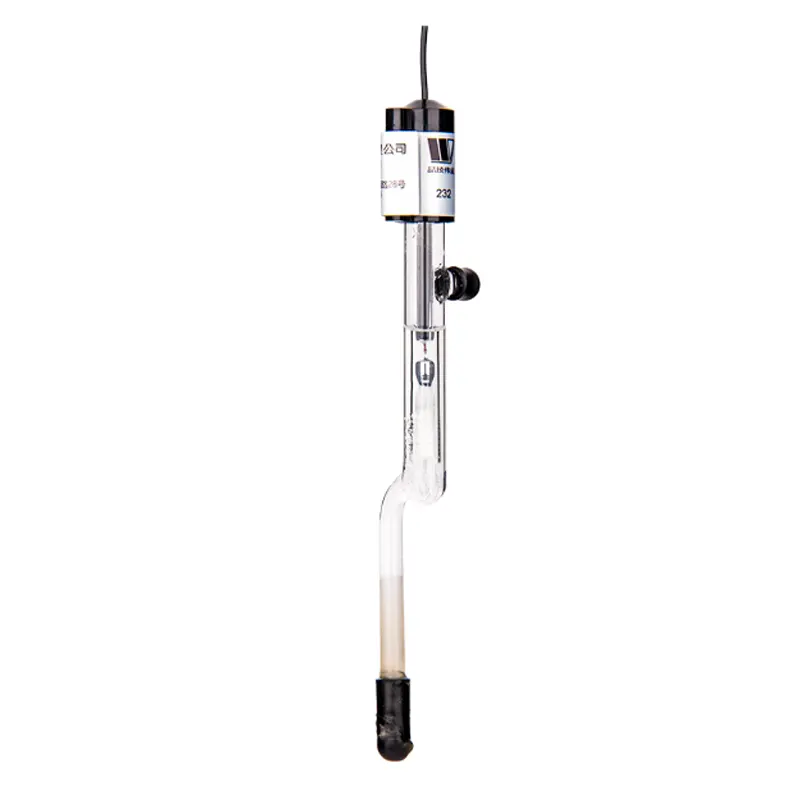
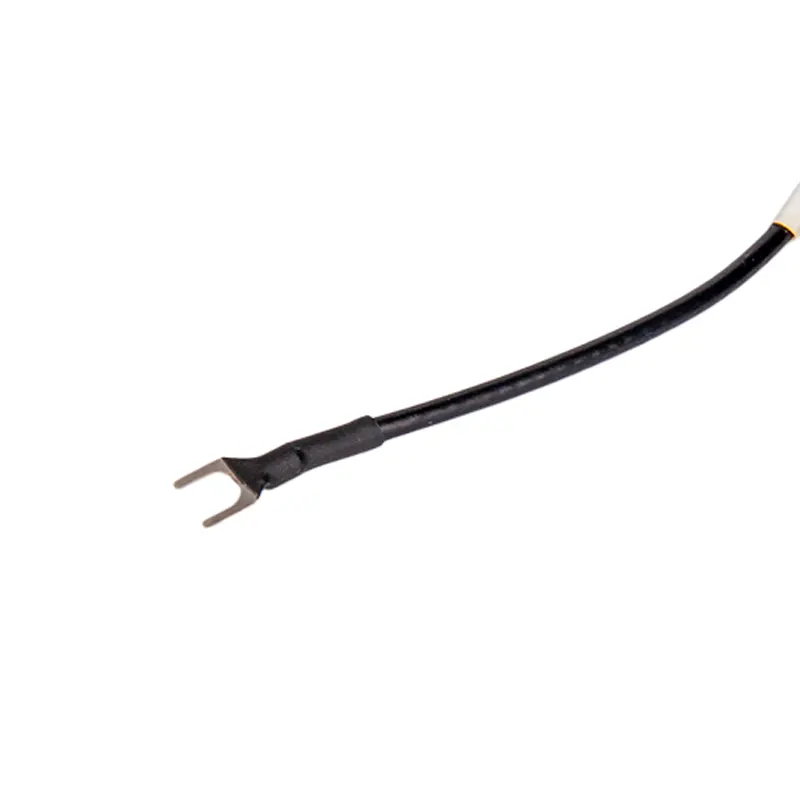
The 232 is a miniaturised saturated calomel single salt bridge reference electrode with ceramic frit junction and glass thin-tube shaft. Temperature range 5–55°C, saturated KCl fill solution, Φ5×50mm, U-shape blade connector. Designed for small sample volumes and confined measurement spaces where a standard-size reference electrode cannot be used.
The 232 is a compact, thin-tube saturated calomel reference electrode designed for electrochemical measurements in small sample volumes or confined vessel geometries where a full-size reference electrode would be impractical. At just Φ5×50mm — significantly smaller than the 217 (Φ10×120mm) and 218 (Φ12×120mm) — the 232 can be used in small beakers, test tubes, micro-volume cells and other restricted measurement environments without displacing excessive sample volume or obstructing other electrodes.
Like the 217, the 232 uses the saturated calomel (Hg/Hg₂Cl₂) reference system in saturated KCl, providing a stable and well-characterised reference potential across the 5–55°C operating temperature range. The ceramic frit junction delivers a controlled, consistent electrolyte flow into the sample, maintaining a stable liquid junction potential throughout measurement. The U-shape blade connector ensures compatibility with the same Skill Scientific instruments as the 217 and 218.
The 232 is particularly useful in titration applications using small sample volumes, ion measurement in limited-quantity samples, and any measurement scenario where electrode spacing within the sample vessel is restricted.
| Model | 232 |
| Description | Reference Electrode (Thin Tube) |
| Electrode Type | Saturated Calomel Single Salt Bridge |
| Temperature Range | 5 – 55°C |
| Junction Material | Ceramic Frit |
| Shaft Material | Glass |
| Fill Solution | Saturated KCl |
| Dimensions | Φ5 × 50 mm |
| Connector | U-shape Blade |
Choose the 232 when your measurement vessel or sample volume is too small to accommodate the full-size 217 reference electrode. The Φ5×50mm body of the 232 allows it to fit into small beakers, test tubes, micro-volume titration cells and other confined measurement spaces where the Φ10×120mm shaft of the 217 would be impractical or would displace too much of the sample. For standard laboratory vessels with adequate volume, the 217 is the more practical choice due to its larger fill reservoir and longer service interval between refills.
The 232 uses the same saturated calomel reference system and ceramic frit junction as the 217, providing equivalent reference potential stability. The smaller junction area means the electrolyte flow rate is lower, which can extend the time needed for junction potential equilibration in some samples. Allow adequate equilibration time before recording measurements, particularly when moving between samples of significantly different ionic strength.
Yes. Like the 217, the 232 is a calomel electrode containing mercury (Hg) and mercurous chloride (Hg₂Cl₂). Handle and dispose of in accordance with local regulations for mercury-containing laboratory equipment. If mercury-free operation is required, use the 218 Ag/AgCl reference electrode instead — note that the 218 is available in standard size only (Φ12×120mm).
The smaller body of the 232 holds less fill solution than the 217, so the KCl level should be checked more frequently during intensive use. Replenish with fresh saturated KCl solution through the fill hole as needed. Keep the fill hole open during measurement and close the fill plug during storage. Store upright with the electrode tip immersed in saturated KCl solution to prevent the ceramic frit from drying out.
Yes. The 232 uses the same U-shape blade connector as the 217 and 218, making it compatible with the same Skill Scientific instruments including the ZD-2 automatic potentiometric titrator and ion meters that require an external reference electrode.
Before You Go — Get a Free Quote