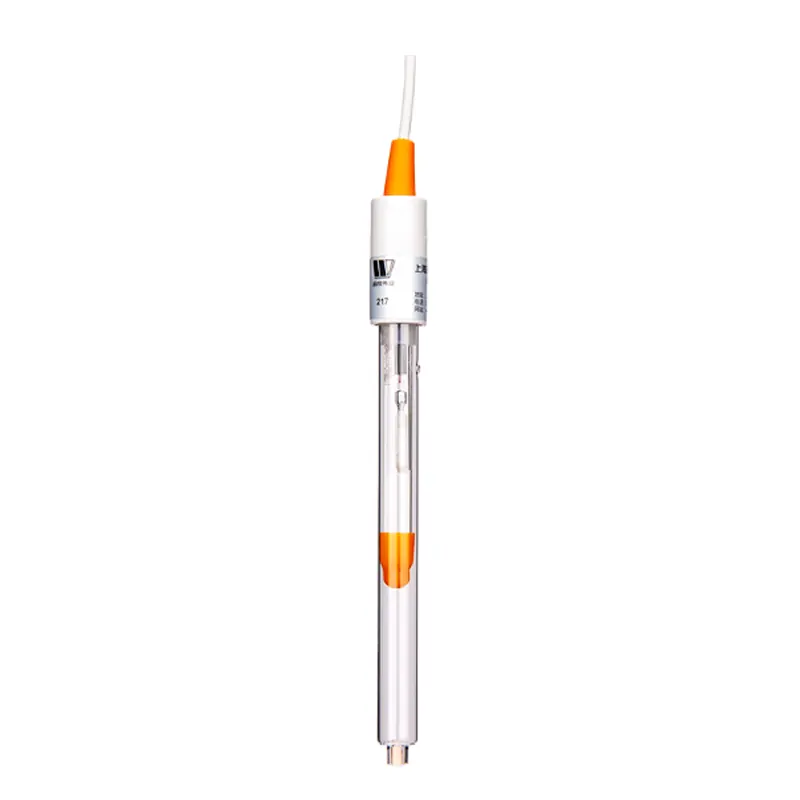
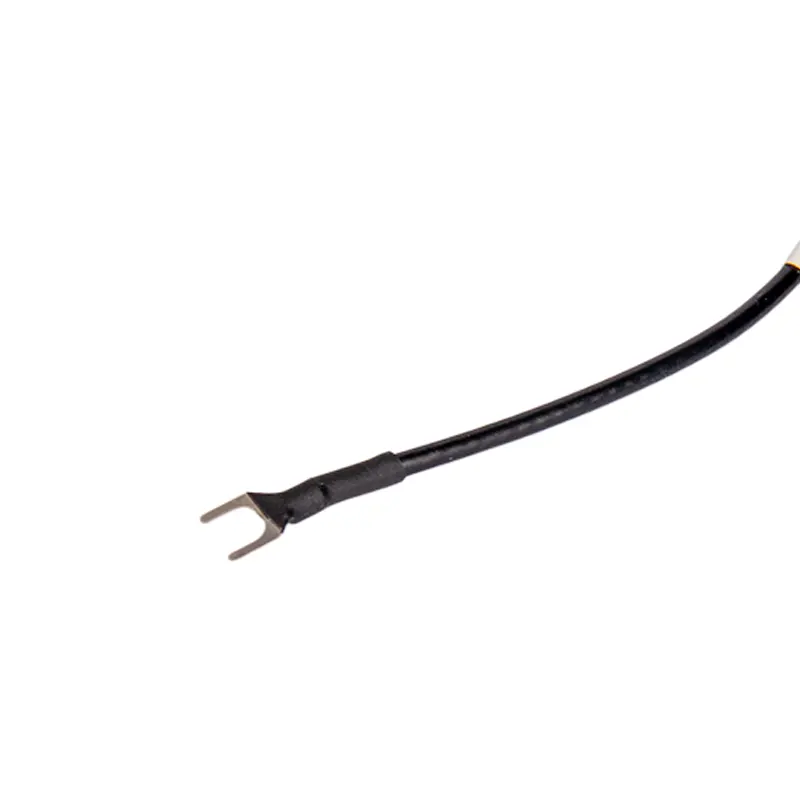
The 217 is a saturated calomel single salt bridge reference electrode with ceramic frit junction and glass shaft. Temperature range 5–55°C, saturated KCl fill solution, Φ10×120mm, U-shape blade connector. Provides a stable, well-defined reference potential for use with pH meters, ion meters and titrators.
The 217 is a saturated calomel electrode (SCE) — one of the most widely used and well-characterised reference electrodes in electrochemical analysis. It provides a stable, reproducible reference potential based on the mercury/mercurous chloride (calomel) redox system in saturated KCl solution, offering excellent potential stability across the 5–55°C operating range.
The single salt bridge design uses a ceramic frit junction to provide a controlled, stable flow of reference electrolyte into the sample. The ceramic frit produces a low but consistent liquid junction potential, ensuring reliable reference conditions for potentiometric measurements including pH, ion concentration and ORP determinations. The glass shaft provides chemical resistance across a wide range of aqueous samples.
The 217 uses a U-shape blade connector, making it compatible with Skill Scientific instruments equipped with this connector type, including the ZD-2 automatic potentiometric titrator. The saturated KCl fill solution must be maintained at an adequate level during use and replenished periodically.
| Model | 217 |
| Description | Reference Electrode |
| Electrode Type | Saturated Calomel Single Salt Bridge |
| Temperature Range | 5 – 55°C |
| Junction Material | Ceramic Frit |
| Shaft Material | Glass |
| Fill Solution | Saturated KCl |
| Dimensions | Φ10 × 120 mm |
| Connector | U-shape Blade |
A saturated calomel electrode (SCE) uses the mercury/mercurous chloride (Hg/Hg₂Cl₂) redox system in saturated KCl solution as its electrochemical basis. This system produces a highly stable, reproducible electrode potential of +0.241V vs the standard hydrogen electrode (SHE) at 25°C. SCE has been widely used as a laboratory reference electrode for decades due to its excellent stability, well-characterised potential and reliable performance across a wide range of measurement conditions.
Both are reference electrodes but differ in structure and connector type. The 217 is a saturated calomel single salt bridge electrode with U-shape blade connector, suited to applications where the stable SCE potential is preferred. The 232 has different structural and connector specifications — check the 232 product page for full comparison details. Contact us if you need guidance on which reference electrode is appropriate for your specific instrument and application.
The 217 uses saturated KCl as the reference fill solution. During measurement, keep the fill hole open (remove the fill plug) to allow a slight positive pressure head that ensures steady electrolyte flow through the ceramic frit junction. Periodically check the KCl level and replenish with fresh saturated KCl solution when the level drops. If KCl crystals appear inside the electrode body, this confirms saturation is maintained — this is normal and expected. Close the fill plug during storage.
Yes. The 217 is a calomel electrode containing mercury (Hg) and mercurous chloride (Hg₂Cl₂). Handle and dispose of the electrode in accordance with local regulations for mercury-containing laboratory equipment. Do not discard in general laboratory waste. If mercury-free reference electrodes are required for your application or facility, consider the Ag/AgCl reference electrode alternatives in our range.
Store upright with the fill plug closed and the electrode tip immersed in saturated KCl solution to prevent the ceramic frit junction from drying out. If the junction becomes dry or blocked, soak the electrode tip in warm distilled water for 30–60 minutes to rehydrate the frit before use. Check the fill level and replenish saturated KCl before returning to service.
Before You Go — Get a Free Quote