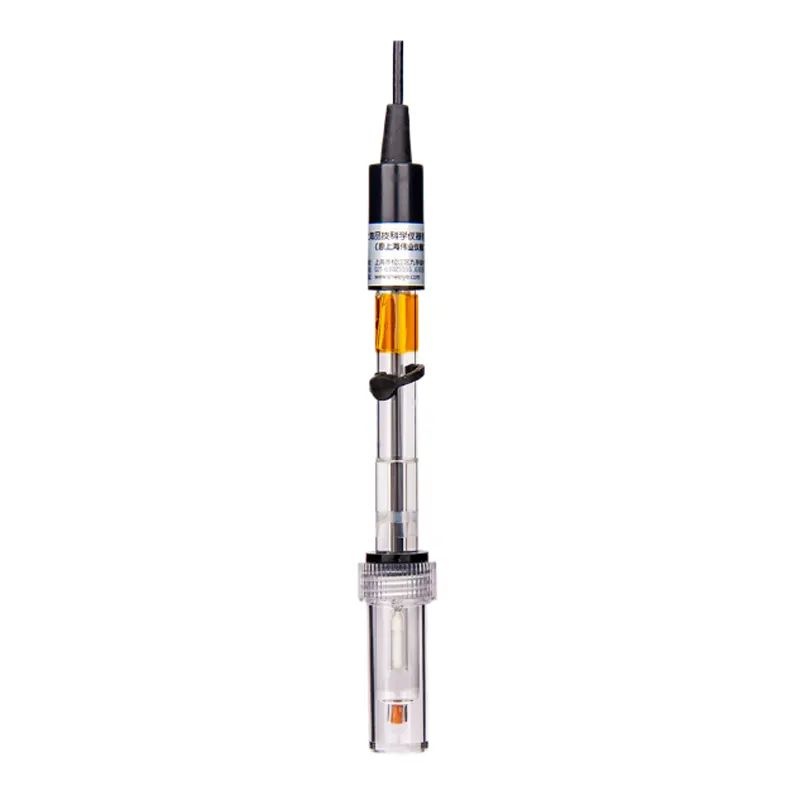
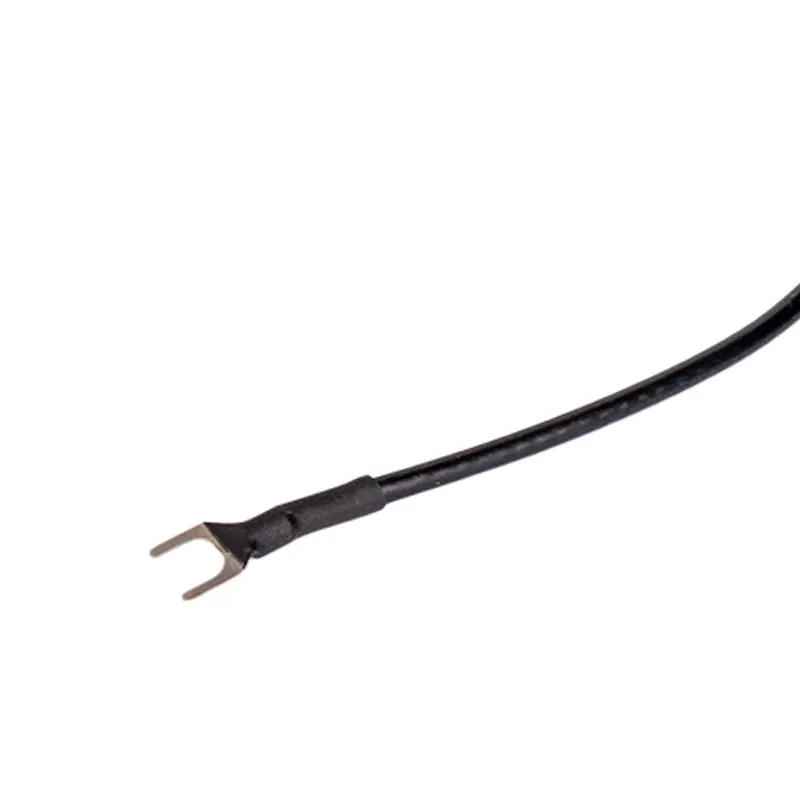
The 6802 is a calomel single salt bridge reference electrode with ceramic frit junction and glass thin-tube shaft. Temperature range 5–55°C, 0.1 mol/L KCl fill solution, Φ5×50mm, U-shape blade connector. The low-concentration KCl fill solution minimises ionic interference — designed for use with ion-selective electrodes where high-concentration electrolytes would compromise measurement accuracy.
The 6802 is a specialised calomel reference electrode designed for potentiometric ion measurement applications where the high KCl concentration of a standard saturated calomel reference electrode would interfere with the target ion determination. While the 217 and 232 reference electrodes use saturated KCl as the fill solution, the 6802 uses 0.1 mol/L KCl — a significantly more dilute electrolyte that minimises leaching of potassium and chloride ions into the sample.
This design is particularly important in sodium ion measurement, where high concentrations of K⁺ diffusing from a saturated KCl junction can interfere with the sodium-sensitive glass membrane of the indicator electrode, producing artificially elevated or unstable readings. The 0.1 mol/L KCl fill solution substantially reduces this effect, preserving the selectivity and accuracy of sodium ion determination at the low concentration ranges typical of high-purity water monitoring.
The compact Φ5×50mm thin-tube body allows the 6802 to be used in small sample vessels alongside the 6801 sodium ion indicator electrode. The ceramic frit junction provides a controlled, stable electrolyte flow, and the U-shape blade connector ensures compatibility with standard ion meters.
| Model | 6802 |
| Description | Reference Electrode |
| Electrode Type | Calomel Single Salt Bridge |
| Temperature Range | 5 – 55°C |
| Junction Material | Ceramic Frit |
| Shaft Material | Glass |
| Fill Solution | 0.1 mol/L KCl |
| Dimensions | Φ5 × 50 mm |
| Connector | U-shape Blade |
Both are compact calomel reference electrodes with the same dimensions (Φ5×50mm), ceramic frit junction and U-shape blade connector. The key difference is the fill solution: the 232 uses saturated KCl, while the 6802 uses 0.1 mol/L KCl. Saturated KCl produces a more stable junction potential in general pH and ORP measurement, but introduces high concentrations of K⁺ that can interfere with sodium-selective and other ion-selective electrodes. The dilute 0.1 mol/L KCl in the 6802 minimises this ionic interference, making it the correct reference electrode for ion-selective measurements.
In ion-selective electrode measurements, the reference electrode fill solution can leach into the sample through the junction and introduce unwanted ions. In sodium ion measurement, K⁺ ions from a saturated KCl reference can diffuse to the sodium-sensitive membrane and cause interference, particularly at low sodium concentrations. Using 0.1 mol/L KCl dramatically reduces this K⁺ leakage, preserving the accuracy and selectivity of the sodium — or other target ion — measurement.
Yes. The 6802 is a calomel electrode containing mercury (Hg) and mercurous chloride (Hg₂Cl₂). Handle and dispose of in accordance with applicable local regulations for mercury-containing laboratory equipment.
Store upright with the fill plug closed and the electrode tip immersed in 0.1 mol/L KCl solution — do not store in saturated KCl or distilled water, which would alter the electrolyte concentration inside the electrode. Open the fill hole during measurement to maintain electrolyte flow. Check the fill level regularly — the small body holds less solution than full-size reference electrodes and may require more frequent replenishment during intensive use. If the ceramic frit junction becomes blocked or dry, soak in warm distilled water before returning to service.
Top up using fresh 0.1 mol/L KCl solution only. Do not use saturated KCl or other concentrations, as this will change the electrode’s reference characteristics. Add solution through the fill hole using a small syringe or dropper until the level is adequate, then replace the fill plug for storage.
Before You Go — Get a Free Quote