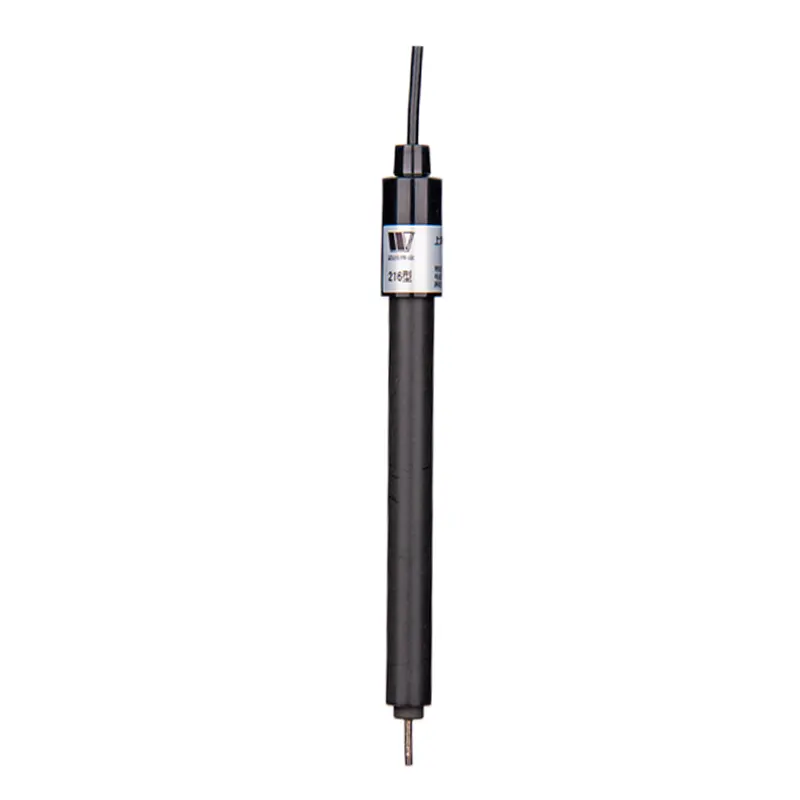
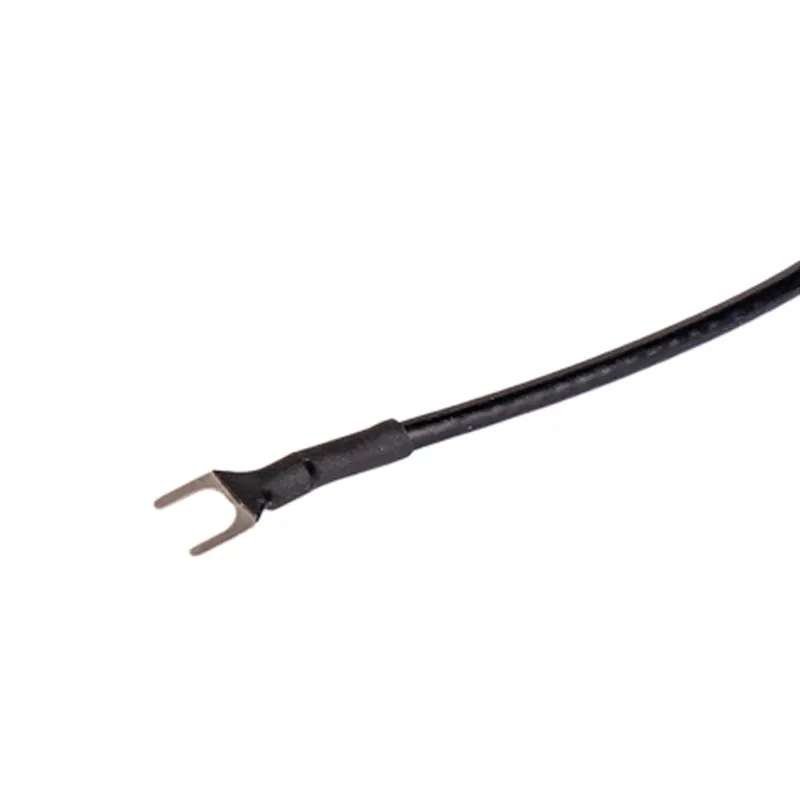
The 216 is a silver indicator electrode with ABS shaft, temperature range 0–50°C. Dimensions Φ12×120mm, U-shape blade connector. Used as an indicator electrode in argentometric (silver) potentiometric titrations for chloride, bromide and iodide determination.
The 216 silver electrode is a solid metal indicator electrode designed for argentometric potentiometric titrations — the electrochemical determination of halide ions (chloride, bromide, iodide) using silver nitrate as the titrant. The silver metal sensing element responds to silver ion (Ag⁺) activity in solution according to the Nernst equation, producing a sharp, detectable potential change at the precipitation titration endpoint when the target halide has been completely precipitated.
In argentometric titration, the 216 is used as the indicator electrode alongside a compatible reference electrode, connected to the ZD-2 automatic potentiometric titrator. As silver nitrate is added, the potential at the silver electrode tracks the progressive depletion of free halide ions, and the instrument detects the inflection point in the potential-volume curve to determine the precise endpoint.
The ABS plastic shaft provides a lightweight, impact-resistant alternative to glass-bodied electrodes — practical for the repeated handling associated with routine titration workflows. The U-shape blade connector ensures direct compatibility with Skill Scientific titrators and other potentiometric instruments.
| Model | 216 |
| Description | Silver Electrode |
| Temperature Range | 0 – 50°C |
| Shaft Material | ABS |
| Fill Solution | — |
| Dimensions | Φ12 × 120 mm |
| Connector | U-shape Blade |
The 216 is used for argentometric potentiometric titrations — specifically the determination of chloride (Cl⁻), bromide (Br⁻) and iodide (I⁻) by precipitation with silver nitrate (AgNO₃) as the titrant. As silver nitrate is added to the sample, the halide ions form insoluble silver halide precipitates (AgCl, AgBr, AgI). The 216 silver electrode detects the change in Ag⁺ activity at the endpoint, allowing the ZD-2 titrator to identify the precise equivalence point.
Yes. The 216 is an indicator electrode and must be paired with a compatible reference electrode to complete the electrochemical measurement circuit. For argentometric titrations, the 232 reference electrode is commonly used. Connect both electrodes to the ZD-2 automatic potentiometric titrator according to the instrument’s connection guide.
Both are solid metal indicator electrodes for potentiometric titrations. The 216 silver electrode is specifically designed for argentometric (precipitation) titrations involving silver ion — chloride, bromide and iodide determinations. The 213 platinum electrode is used for redox titrations where the electrode responds to the solution’s oxidation-reduction potential rather than a specific metal ion. The choice depends entirely on the titration method: use the 216 for halide argentometric titrations, the 213 for redox titrations.
ABS (Acrylonitrile Butadiene Styrene) plastic is selected for the 216 shaft because it is lightweight, impact-resistant and chemically compatible with the silver electrode system and the sample types used in argentometric titrations. The reduced weight compared to a glass shaft is practical for frequent handling in titration workflows. Glass shafts, as used in the 213 platinum electrode, are preferred for electrodes requiring the higher chemical inertness of glass in strongly acidic or oxidising environments.
After each use, rinse the silver electrode tip thoroughly with distilled water. If the silver surface becomes tarnished or coated with silver halide precipitate — which can cause slow or erratic response — clean gently with fine abrasive paper or polishing cloth, then rinse with distilled water and allow to equilibrate in a dilute silver nitrate solution before use. Avoid prolonged exposure to strong light, which can cause photochemical darkening of the silver surface. Store dry in a clean, covered container.
Before You Go — Get a Free Quote