
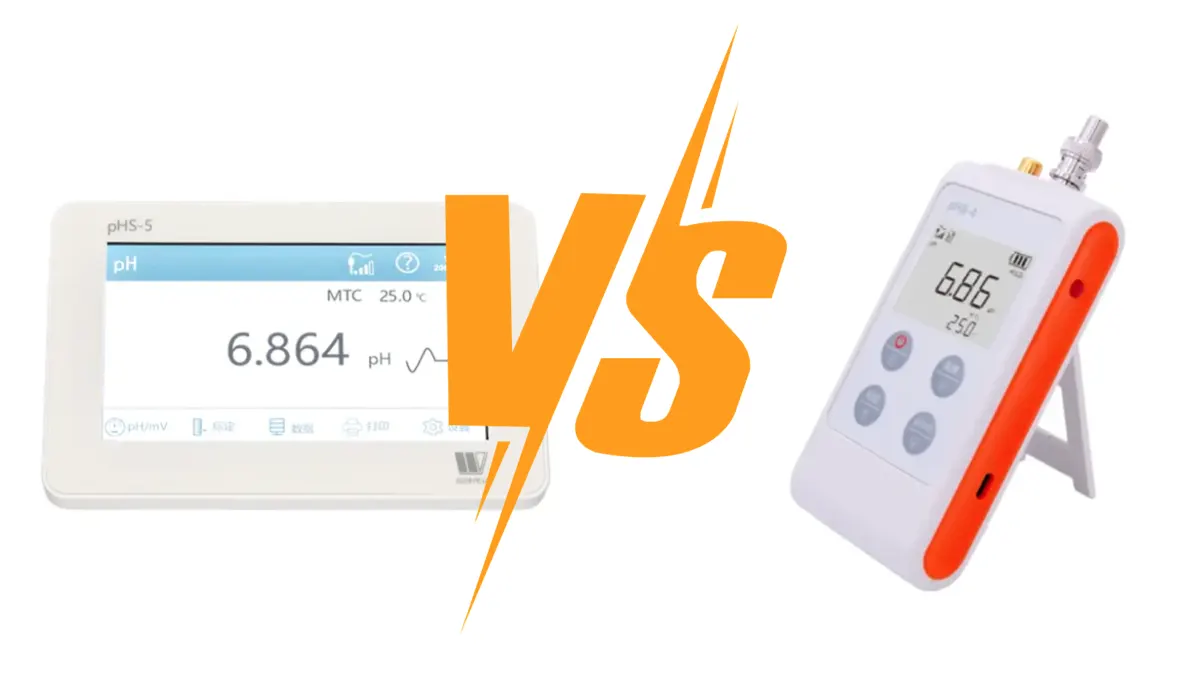
Have you ever considered the differences between a portable vs benchtop pH meter for your work? The primary distinction lies in how you intend to use it. If you require testing in various locations, a portable meter allows you to move freely and operate outdoors, making it suitable for challenging field conditions. On the other hand, for laboratory tasks, benchtop meters offer greater accuracy. They feature larger screens and facilitate easy data transfer.
- The pH meter market is expanding globally, particularly in laboratories and factories that demand precise results.
- Benchtop meters excel in labs and factories as they effectively test buffers, chemicals, and solutions.
Ultimately, you should select the tool that best meets your requirements. Consider factors such as accuracy, mobility, cost, and application relevance to your work. Your choice between portable vs benchtop pH meters should reflect what is most important to you.
Key Takeaways
- Portable pH meters are great for fieldwork. You can test water and soil anywhere with them.
- Benchtop pH meters are more accurate. They work best in labs.
- Think about where you will test when picking a pH meter. Portable models are good if you need to move around.
- Portable meters usually cost less. They are a good choice if you want to save money and do quick tests.
- Benchtop meters often have extra features. These can include saving data and testing more than one thing.
- Both types of meters need calibration. This helps make sure your results are correct.
- Pick a portable meter if you want speed and flexibility. Choose a benchtop meter if you need careful and detailed results.
- Look at what you need, like how exact you want to be and how many samples you have, before you buy.
Portable vs Benchtop pH Meter Overview
What Is a pH Meter
A pH meter checks if something is acidic or basic. It measures the pH level in liquids. This tells you if it is sour, neutral, or alkaline. You use it to make sure water, soil, or chemicals are safe. If you want good results, you need a pH meter you can trust.
Types of pH Meters
There are different kinds of pH meters you can buy. The main ones are portable and benchtop models. Each type works best in certain places. Let’s look at them so you can pick the right one.
Tip: Pick your pH meter based on where you will use it and how exact you need your results to be.
| Type | Description | Use Cases |
|---|---|---|
| Benchtop | These are bigger meters for labs and sit on desks. | Good for labs and careful testing. |
| Handheld | These are small and easy to carry, with a screen and probe. | Best for testing outside or in the field. |
| Pen-tester | This is the smallest kind and fits in your pocket. | Great for quick checks anywhere. |
Portable pH Meters
Portable pH meters are easy to carry around. You can take them to farms, rivers, or factories. They fit in your hand or pocket, so they are not heavy. You get fast results wherever you are. Portable meters are great for testing outside or when you move a lot. You can use them for checking water, farming, or fish tanks. If you need to test water on the spot, these meters help a lot.
Benchtop pH Meters
Benchtop pH meters stay in one place, like a lab. You usually see them on desks in research centers. They plug into the wall for power. Benchtop meters have big screens and are very exact. You use them for careful testing and lots of samples. If you want the best results and need to save data, these are the best. They help with research and checking quality in labs.
When you look at portable and benchtop pH meters, think about your main job. Portable meters are good if you need to move around. Benchtop meters are best for labs and careful work. Both help you test things, but each is better for certain jobs. Pick the one that fits your work and where you use it.
Design & Mobility Comparison
When you look at portable and benchtop pH meters, you see they are very different. Each one looks different and works in its own way. The way they are made changes where you can use them and how easy they are to move. Let’s see what makes each one special.
Portable pH Meters: Mobility & Field Use
Size and Portability
Portable pH meters are made to be easy to carry. Most of them weigh less than 1.5 pounds. You can put one in your bag or pocket. You do not need a big case or a special desk spot. Because they are small, you can take them anywhere you want. You can bring them to the field, a river, or a greenhouse. If you need to move fast or test in many places, this design helps you save time and energy.
| Feature | Portable pH Meters | Benchtop pH Meters |
|---|---|---|
| Weight | Less than 1.5 pounds | Heavier, stays on lab benches |
| Portability | Easy to transport | Stationary |
| Durability | Tough, IP67 rated shells | Not designed for mobility |
Power and Durability
Portable meters are strong and can handle hard jobs. Many have cases that keep water out and protect them from drops. Some even work if it rains or gets muddy. The batteries last a long time, sometimes up to 120 hours. You do not have to worry about losing power when you are testing outside. Some even use solar power, which is good for far away places. If you check soil or water in many spots, you will like how tough these meters are.
Tip: Portable meters give you quick results, so you can decide about fertilizer or water right away.
Benchtop pH Meters: Lab Setup
Stationary Design
Benchtop pH meters are bigger and heavier. They are made to stay in one place. You usually see them on lab benches, plugged in for power. This makes them steady and helps you get very good results. If you work in a lab, you need a meter that does not move or fall over.
Many labs, like ones for microbiology or synthetic biology, use benchtop meters because they are very exact. You also find them in places that test water, teach science, or check soil. These meters can test many samples at the same time, which is good for busy labs.
User Interface & Documentation
Benchtop meters have big screens that are easy to read. They have more buttons and choices for testing and calibration. Some let you save your data or connect to a computer. This helps you keep your results safe and share them with others.
If you want your results to be exact, and you need to keep good records, benchtop meters are best. They work well in labs where you test many things and need to stay organized.
Note: Benchtop meters often have special cleaning and automatic calibration, so they are great for lots of careful work.
In the end, you should pick the meter that fits your job. If you need to move and want something strong, choose portable. If you want steady and very exact results, pick benchtop.
Accuracy & Performance
When you look at portable and benchtop pH meters, you should think about how well each one works. You want your results to be right, no matter where you are. Let’s see what you get from each type.
Portable pH Meters: Field Accuracy
Portable meters let you check pH in many places. People use them for checking the environment, farms, or water. They give you answers fast, but you should know how close those answers are to the real number.
Measurement Range
Most portable meters are accurate within ±0.02 pH. This is good for most jobs outside. You can trust them for field work, but they are not as exact as benchtop meters.
- Portable meters are good for checking water in rivers or tanks.
- You get answers fast to help you decide what to do.
- The accuracy is good for field work, but not for research labs.
Calibration in the Field
You need to set up your portable meter before you use it. This is called calibration. It helps you get the best results. Here are some tips for doing this outside:
- Always set up your meter at the same temperature as your sample. This keeps your numbers steady.
- Use pH buffer solutions to set up your meter. Doing a 2-point calibration makes it more accurate.
- Watch out for temperature changes. If it gets hotter or colder, your meter might not be as accurate.
Tip: If you want your results to be right, set up your meter often and keep it clean.
Portable meters are strong and simple to use. You can take them anywhere, but you need to set them up right and watch the temperature. This helps you get the best results outside.
Benchtop pH Meters: Lab Precision
Benchtop meters are made for labs. You use them when you need very exact numbers. These meters help with checking quality, research, and chemistry.
Advanced Calibration
Benchtop meters have special ways to set them up. You can do more than one calibration point, which makes them more exact. Most benchtop meters are accurate to ±0.01 pH. This is great for labs that need perfect results.
- You get steady numbers that do not change much. The numbers usually stay within ±0.005 pH over ten minutes.
- Benchtop meters block out extra noise and work fast.
- You can trust these meters for important tests and research.
Note: Benchtop meters with high accuracy are best for chemistry and science tests.
Multi-Parameter Measurement
Benchtop meters can check more than just pH. You can use them to test other things at the same time. This makes lab work easier and keeps your desk neat.
- Benchtop meters can check pH, mV/ORP, conductivity, TDS, salinity, and temperature.
- You can add more parts to your meter to test more things.
- Touchscreens make it easy to use.
- You get good results from one system that is set up right.
| Parameter | Benchtop Meter Capability |
|---|---|
| pH | Yes |
| Conductivity (EC) | Yes |
| ORP | Yes |
| TDS | Yes |
| Salinity | Yes |
| Temperature | Yes (with ATC) |
Benchtop meters help you test many samples and keep your results safe. You get very good accuracy, steady numbers, and results you can trust. This is why labs use benchtop meters for important work.
If you need to check more than pH, benchtop meters can do it all.
Portable meters are good for quick checks outside. Benchtop meters are best for labs, careful setup, and testing many things. Pick the meter that gives you the accuracy and results you need.
Application Scenarios
Portable pH Meters: Versatile Uses
Environmental & On-Site Testing
Sometimes you need to test water or soil right away. Portable pH meters make this easy for you. They are small and strong, so you can carry them anywhere. You do not need a lab bench or plug. Just turn it on and start testing. You get results fast, even if you are far from a lab.
Here’s where you might use portable pH meters:
| Application Area | Description |
|---|---|
| Environmental Monitoring | Used for checking pH in lakes and rivers. |
| Agriculture | Helps test soil to grow better crops. |
| Water Quality Testing | Checks if drinking water is safe. |
Portable meters work for many jobs. If you check the environment, you can test rivers or lakes right there. You do not have to wait for lab results. This means you can fix problems quickly if you find one. These meters work well, even if you move around a lot.
Agriculture & Aquaculture
Farmers and fish growers use portable meters all the time. You can test soil before you plant crops. This helps you pick the best fertilizer and get more crops. In aquaculture, you can test water in tanks or ponds. This keeps fish healthy by making sure the water is safe. You do not need heavy tools or power. Portable meters let you work anywhere you want.
Tip: Always set up your meter before you test in a new place. This keeps your results right and steady.
Benchtop pH Meters: Laboratory Applications
Quality Control & R&D
If you work in a lab, you want your results to be right. Benchtop pH meters help you get very good and steady results. You can trust them for quality control and research. These meters do more than just pH tests. You can also check conductivity, TDS, salinity, and temperature at the same time. This saves you time and makes your work easier.
- You get good results that meet lab rules.
- You do not need lots of devices for different tests.
- Automatic temperature compensation keeps your results steady.
- You can save your data and follow every test.
- Big screens and simple buttons make testing easy.
- You can test one sample in many ways without moving it.
High-Volume Testing
Benchtop meters are great when you have many samples to test. You can set up your meter once and test a lot without stopping. This means you get the same good results every time. You do not have to worry about losing data or making mistakes. Benchtop meters help your lab run well, even when you are busy.
When you choose between portable and benchtop pH meters, think about your main job. Portable meters give you speed and freedom outside. Benchtop meters give you steady, exact results in the lab.
Cost & Value
Portable pH Meters: Upfront Cost
When you look at portable pH meters, you notice the price right away. These meters usually cost less than benchtop models. You can find a good portable meter for $50 to $300. Some advanced models may cost a bit more, but most stay in this range. If you need to test pH in the field or at different sites, you do not have to spend a lot at the start.
Portable meters give you value if you want to move around or test in many places. You do not need extra equipment or a special setup. You just need the meter, some calibration solutions, and you are ready to go. This makes portable meters a smart choice for students, small farms, or anyone who needs quick results without a big investment.
Tip: If you only test a few samples each day or need to travel, a portable meter saves you money and time.
Benchtop pH Meters: Long-Term Value
Benchtop pH meters cost more at first. Prices often start around $300 and can go up to $2,000 or more for advanced models. You might wonder why you should pay more. The answer comes from what you get over time.
Benchtop meters give you high accuracy and many features. You can use them for years in a lab without problems. These meters often come with large screens, data storage, and advanced calibration options. You can test many samples quickly, which helps if you work in a busy lab.
If you do high-volume testing, benchtop meters help you save money in the long run. They can automate pH measurements, so you do not have to do the same task over and over. This frees up your time for more important work, like checking results or preparing samples. Automation also means you get the same results every time, which helps you avoid mistakes and wasted materials.
- You spend less on staff time because the meter does the work.
- You get steady, reliable results, which means fewer failed tests.
- You can use one meter for many types of measurements, not just pH.
| Meter Type | Typical Price Range | Best For | Long-Term Value |
|---|---|---|---|
| Portable | $50 – $300 | Field, small labs | Low upfront, flexible |
| Benchtop | $300 – $2,000+ | Labs, high-volume work | High accuracy, durable |
Note: Benchtop meters help you keep your lab running smoothly. You get better quality and save money over time, especially if you test many samples each day.
When you choose between portable and benchtop, think about how often you test and what matters most. Portable meters keep costs low and let you move. Benchtop meters cost more at first but give you long-term value, especially for labs that care about quality and efficiency.
Choosing the Right pH Meter
Assessing Your Needs
You want to pick the best pH meter for your work. Start by thinking about where you will use it. Will you test samples in a lab, or do you need to check water or soil outside? If you move around a lot, a portable meter makes your job easier. If you stay in one place, a benchtop meter gives you more features.
Ask yourself these questions:
- Do you need fast results on the go?
- Will you test many samples each day?
- Is your work indoors or outdoors?
- Do you need to save your results for later?
When you answer these questions, you can see what kind of meter fits your needs.
Key Factors: Accuracy, Mobility, Budget
You want your results to be right every time. Accuracy matters most for good testing. Make sure the meter you choose gives you the level of detail you need. Some jobs need very exact numbers, while others just need a quick check.
Here are some key things to look for:
- Accuracy: This helps you trust your results.
- Range: Make sure the meter can measure all the samples you have.
- Resolution: This lets you see small changes in your samples.
- Ease of Use: You want a meter that is simple to use, so you do not waste time.
- Durability: If you work outside, pick a meter that can handle drops and water.
- Battery Life: Long battery life means you can test more without stopping.
- Data Logging: Saving your results helps you keep track of your work.
- Calibration: Pick a meter that is easy to set up and keep accurate.
Think about your budget, too. Some meters cost more because they do more. If you only need basic checks, you do not have to spend a lot.
Tip: Write down what you need before you shop. This helps you find the right meter without guessing.
Common Mistakes to Avoid
Many people make simple mistakes when they choose a pH meter. You can avoid these problems if you know what to watch for.
- Some people forget to check how to calibrate the meter. This can make your results wrong.
- Others do not look at the accuracy or resolution. They end up with a meter that does not fit their work.
- People sometimes pick a meter that is not strong enough for outdoor use.
- Some buy a meter with a short battery life, which stops them from testing all day.
- Others skip data logging, so they lose track of their results.
If you remember these points, you can pick a meter that works well for you. Take your time, read the details, and ask questions if you are not sure.
Pros & Cons Summary
Picking between portable and benchtop pH meters can be hard. You want to know what each meter does well and where it is not so good. Let’s look at the good and bad points so you can choose wisely.
Portable pH Meters: Pros & Cons
Portable pH meters let you move around easily. You can carry them anywhere and test water or soil right away. They give you fast results. Many portable meters are very accurate, sometimes as close as ±0.01 pH. Some have temperature compensation and data storage. These features help you keep your results steady and neat. If you work outside or need to move a lot, portable meters make your job easier.
Pen-tester pH meters are even smaller and simpler. You can put one in your pocket and use it for quick checks. They use batteries and are simple to use. You do not need much training to use them.
Here’s what people say about these meters:
| Type of pH Meter | Advantages | Disadvantages |
|---|---|---|
| Portable/Handheld pH Meter | High accuracy (±0.01 pH), has temperature compensation, stores data, good for moving around. | Sometimes has fewer features than benchtop meters. |
| Pen-tester pH meters | Easy to use, small size, battery-powered. | Lower precision (usually ±0.1 pH), basic functions. |
You get flexibility and speed, but you may miss advanced features. Some portable meters are not as precise as lab meters. If you need to test many samples or want more options, you might feel limited.
Tip: Portable meters are best for testing on the go or in tough places.
Benchtop pH Meters: Pros & Cons
Benchtop pH meters are great for labs. You get accurate and steady measurements every time. These meters can test bigger samples and check several things at once. You can save your data, change the display, and use advanced features. If you care about quality and need to follow strict lab rules, benchtop meters help you stay organized.
Here’s what lab workers say:
| Advantages | Disadvantages |
|---|---|
| Accurate and steady measurements | Needs a special workspace |
| Can test bigger samples | Needs a power source |
| Can test many things at once | Not as easy to move as handheld meters |
| Has advanced features like saving data | |
| Display can be changed |
You get lots of features and steady results, but you lose mobility. Benchtop meters need power and a special spot in your lab. You cannot take them outside or use them in the field.
Note: Benchtop meters are best for labs that need high accuracy and advanced features.
When you look at the good and bad points, think about your main job. Portable meters give you freedom and speed. Benchtop meters give you precision and advanced features. Pick the meter that fits your work and needs.
Conclusion
Picking a portable or benchtop pH meter depends on your needs. Here is a simple comparison table:
| Feature | Portable pH Meters | Benchtop pH Meters |
|---|---|---|
| Accuracy | Works well outside | Best for lab work |
| Portability | Easy to move | Stays in one spot |
| Durability | Made for tough places | Not as strong |
| Data Logging | Good for field jobs | Has more options |
| Ease of Use | Fast and simple | Gives more details |
| Battery Life | Needed for travel | Labs do not worry |
Think about these questions before you choose:
- What will you test with your meter?
- How many times will you use it?
- Do you need exact results or just quick answers?
- Is battery life or toughness important for you?
- Should your meter save lots of results?
You know what you need best. If you want help, our team can give advice and suggest products.
FAQ
What is the main difference between handheld and benchtop pH meters?
You can use handheld meters anywhere. Benchtop meters stay in the lab. Handheld models are highly portable and fit in your bag. Benchtop meters give you more features for labs.
Can I use handheld pH meters for field applications?
Yes, you can! Handheld pH meters work great for field applications. You can test water, soil, or other samples outside. These meters are tough and easy to carry.
Are handheld pH meters accurate enough for quality control applications?
You can trust many handheld models for quality control applications. Some offer good accuracy and measurement stability. Always check the specs before you buy.
What makes a handheld pH meter a popular handheld unit?
A popular handheld unit gives you quick results, easy calibration, and a clear screen. You can use it in many places. People like these meters because they are simple and reliable.
How do portable units help with agricultural testing?
Portable units let you test soil and water right in the field. You can check pH before planting or watering. This helps you make smart choices for crops and fish.
Do handheld pH meters need special care?
You should clean your handheld meter after each use. Store it dry and safe. Calibrate it often for the best results. This keeps your meter working well.
Can I use handheld pH meters for measurement stability?
Yes, you can. Many handheld meters give you steady readings. You get reliable numbers, even when you move from place to place.
Are all handheld pH meters highly portable?
Most handheld pH meters are highly portable. You can carry them in your pocket or bag. They are light and easy to use anywhere.