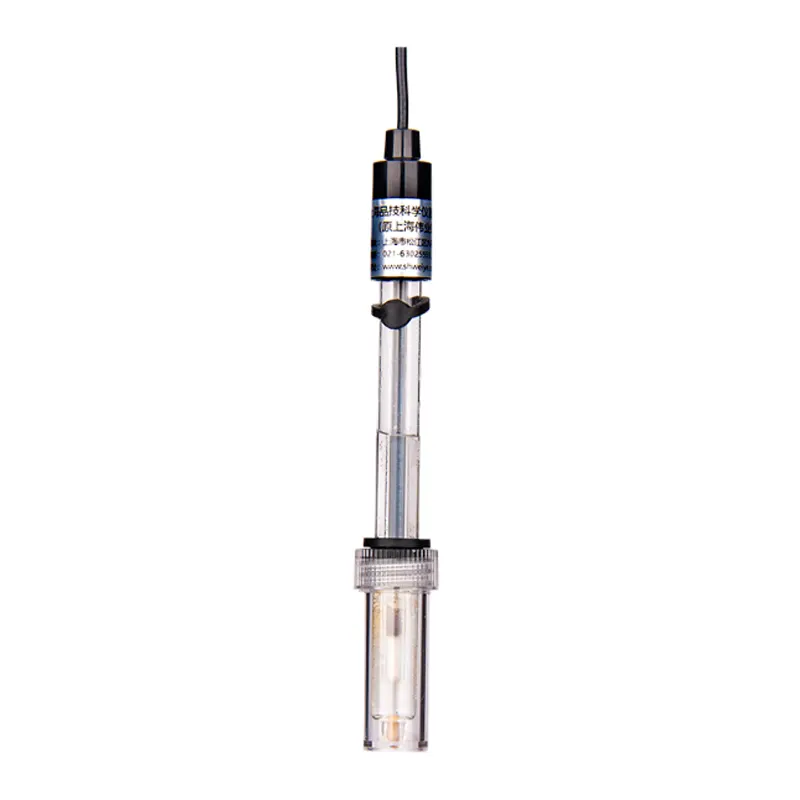
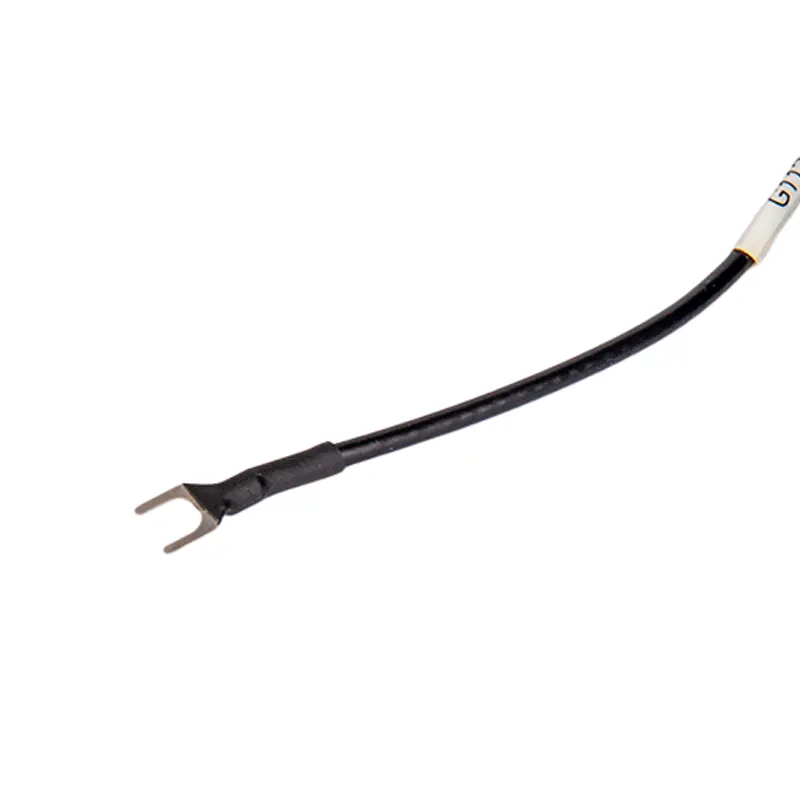
The 218 is a silver/silver chloride (Ag/AgCl) single salt bridge reference electrode with ceramic frit junction and glass shaft. Temperature range 5–55°C, saturated KCl fill solution, Φ12×120mm, U-shape blade connector. Mercury-free design — a modern, environmentally compliant alternative to calomel reference electrodes.
The 218 is an Ag/AgCl (silver/silver chloride) reference electrode — a widely adopted reference system in modern electrochemical analysis. Based on the silver/silver chloride redox system in saturated KCl solution, it provides a stable, reproducible reference potential while eliminating the mercury content associated with calomel electrodes, making it the preferred choice for laboratories where mercury-free operation is required or preferred.
The single salt bridge design uses a ceramic frit junction to provide a controlled, stable flow of reference electrolyte into the sample, maintaining a consistent and low liquid junction potential. The glass shaft (Φ12×120mm) provides excellent chemical resistance across aqueous sample types, and the U-shape blade connector ensures compatibility with Skill Scientific instruments equipped with this connector type, including the ZD-2 automatic potentiometric titrator.
At the same temperature range (5–55°C), junction type and connector as the 217 calomel reference electrode, the 218 is a direct mercury-free alternative suitable for the same range of pH, ion and titration measurement applications.
| Model | 218 |
| Description | Silver/Silver Chloride Reference Electrode |
| Electrode Type | Ag/AgCl Single Salt Bridge |
| Temperature Range | 5 – 55°C |
| Junction Material | Ceramic Frit |
| Shaft Material | Glass |
| Fill Solution | Saturated KCl |
| Dimensions | Φ12 × 120 mm |
| Connector | U-shape Blade |
The Ag/AgCl reference electrode uses the silver/silver chloride redox system (Ag/AgCl/Cl⁻) in saturated KCl solution as its electrochemical basis. This system produces a stable, reproducible reference potential of +0.197V vs the standard hydrogen electrode (SHE) at 25°C. Ag/AgCl electrodes have become the most widely used reference electrodes in modern laboratory analysis due to their stability, reliability, straightforward maintenance and — critically — the absence of mercury, making them compatible with increasingly stringent laboratory environmental regulations.
Both are single salt bridge reference electrodes with ceramic frit junction, saturated KCl fill solution, U-shape blade connector and the same 5–55°C operating range. The key differences are electrode type and shaft diameter: the 217 is a saturated calomel electrode (Hg/Hg₂Cl₂) with Φ10×120mm shaft; the 218 is an Ag/AgCl electrode with Φ12×120mm shaft. The 218 is mercury-free, making it the preferred choice in facilities where mercury-containing equipment is restricted. The 217 SCE has a slightly higher reference potential (+0.241V vs SHE) compared to the 218 Ag/AgCl (+0.197V vs SHE) — this difference must be accounted for when comparing measurements made with each electrode type.
Yes. Both the 217 and 218 use the same U-shape blade connector and are compatible with the same Skill Scientific instruments, including the ZD-2 automatic potentiometric titrator and ion meters that require a separate reference electrode. The slightly larger shaft diameter of the 218 (Φ12mm vs Φ10mm for the 217) should be considered when checking electrode holder clearance.
Both electrodes share the same maintenance requirements. Keep the fill hole open during measurement to maintain electrolyte flow through the ceramic frit. Check and replenish the saturated KCl fill solution periodically. Store with the fill plug closed and electrode tip immersed in saturated KCl solution. Unlike the 217, the 218 contains no mercury, simplifying disposal and handling compliance — standard laboratory waste procedures apply, subject to local regulations.
Store upright with the fill plug closed and the electrode tip immersed in saturated KCl solution. If the ceramic frit junction becomes dry or blocked, soak the electrode tip in warm distilled water for 30–60 minutes to rehydrate before use. Check and top up the KCl fill level before returning to service. Avoid prolonged storage in distilled water, which can dilute the internal electrolyte and affect junction potential stability.
Before You Go — Get a Free Quote