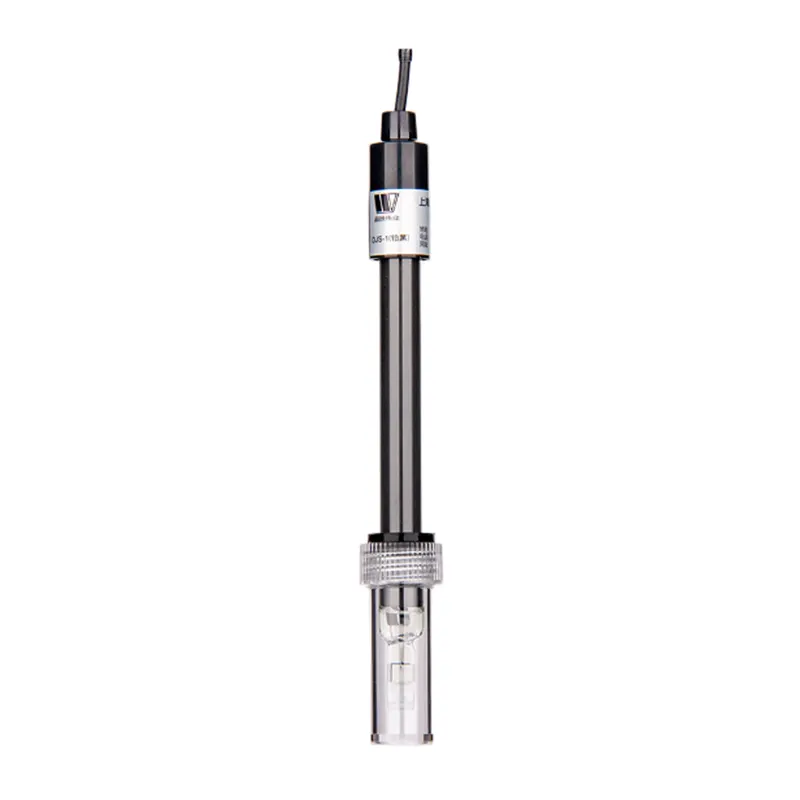
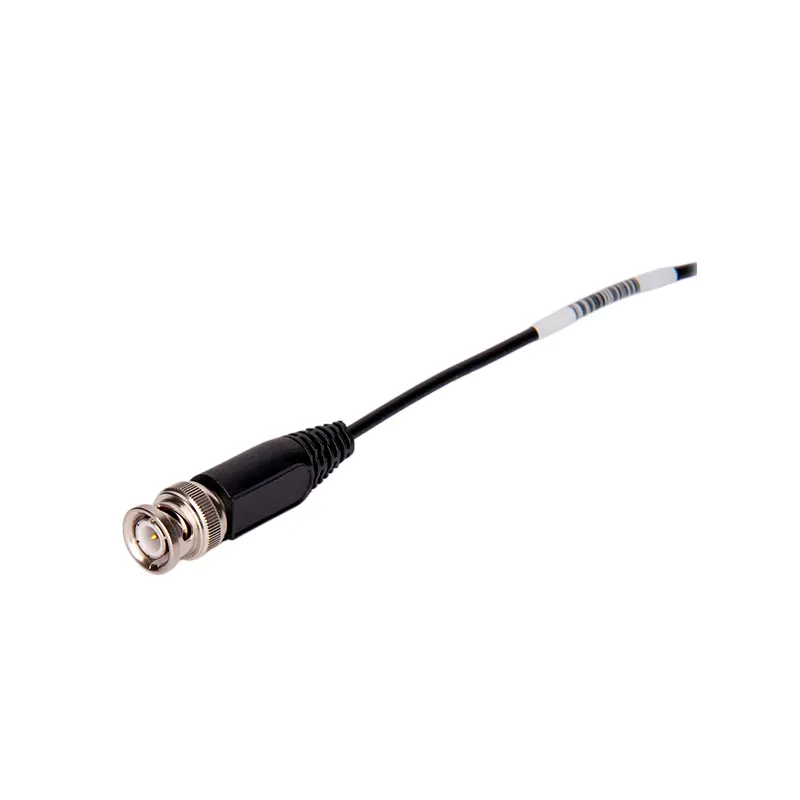
The DJS-1N is a black platinised conductivity electrode with cell constant 1.0±0.2, measuring 2–20000 μS/cm. Glass shaft, Φ12×120mm, BNC connector. The standard conductivity electrode supplied with Skill Scientific DDS-421, DDS-411, DDS-401, DDS-11A and DDB-411 instruments.
The DJS-1N conductivity electrode is the standard conductivity sensing accessory for the Skill Scientific DDS and DDB series conductivity meters. With a cell constant of 1.0±0.2 and a measurement range of 2–20000 μS/cm, it covers the conductivity range of most standard water quality, laboratory and industrial process water applications — from drinking water and environmental samples to moderately concentrated process solutions.
The DJS-1N uses black platinised platinum electrodes — the “black” designation refers to the platinum black coating applied to the electrode surfaces, which increases surface area and reduces polarisation effects for more stable, accurate readings compared to bright (unplatinised) electrodes at mid to high conductivity values. The glass shaft (Φ12×120mm) provides chemical resistance across a wide range of aqueous sample types, and the standard BNC connector ensures compatibility with all Skill Scientific conductivity instruments as well as most other laboratory conductivity meters.
The DJS-1N is included as standard with the DDS-421, DDS-411, DDS-401, DDS-11A and DDB-411 and is available separately as a replacement electrode or additional spare.
| Model | DJS-1N |
| Description | Conductivity Electrode (Black) |
| Measuring Range | 2 – 20000 μS/cm |
| Cell Constant | 1.0 ± 0.2 |
| Shaft Material | Glass |
| Fill Solution | 0.01 mol/L KCl |
| Dimensions | Φ12 × 120 mm |
| Connector | BNC |
The cell constant (K) of a conductivity electrode is the ratio of the distance between the two platinum plates to their surface area, expressed in cm⁻¹. A cell constant of 1.0 means the electrode geometry produces readings that correspond directly to the actual conductivity of the solution. Electrodes with different cell constants (such as 0.1 or 10) are used for different conductivity ranges — a lower cell constant for low-conductivity samples, a higher constant for high-conductivity samples. The DJS-1N (K=1.0) is matched to the 2–20000 μS/cm range and is the most versatile general-purpose choice.
Both have the same cell constant (1.0) and connector type. The DJS-1N uses black platinised platinum electrodes — the platinum black coating increases the electrode surface area, reducing polarisation error and providing more stable readings across the 2–20000 μS/cm range. The DJS-1 (bright) uses unplatinised bright platinum electrodes, which are better suited to very low-conductivity samples where platinum black can introduce adsorption effects. For most laboratory and water quality applications, the DJS-1N (black) is the standard choice.
For low-conductivity samples below 2 μS/cm (purified water, ultrapure water), use the DJS-0.1 electrode (cell constant 0.1, range 0.05–200 μS/cm). For high-conductivity samples above 20000 μS/cm (concentrated process solutions, brines), use the DJS-10 electrode (cell constant 10, range 2000–200000 μS/cm). Contact us if you are unsure which electrode is appropriate for your specific sample type.
Rinse the electrode with distilled water before and after each measurement session. If readings become unstable or drift, clean the platinum surfaces by soaking briefly in 1:1 hydrochloric acid solution (dilute HCl) for 1–2 minutes, then rinse thoroughly with distilled water before re-calibrating. Avoid mechanical contact with the platinum surfaces — scratching or abrasion will damage the platinum black coating and affect measurement accuracy. Store with the electrode tip immersed in 0.01 mol/L KCl solution when not in use.
Recalibrate the electrode constant whenever the electrode is replaced, cleaned or if readings appear inaccurate compared to a known standard. For routine laboratory use, a calibration check at the start of each working day with the appropriate conductivity standard solution is recommended. The electrode constant may shift slightly over time as the platinum black coating ages — if calibration correction exceeds the expected range, replacement of the electrode should be considered.
Before You Go — Get a Free Quote