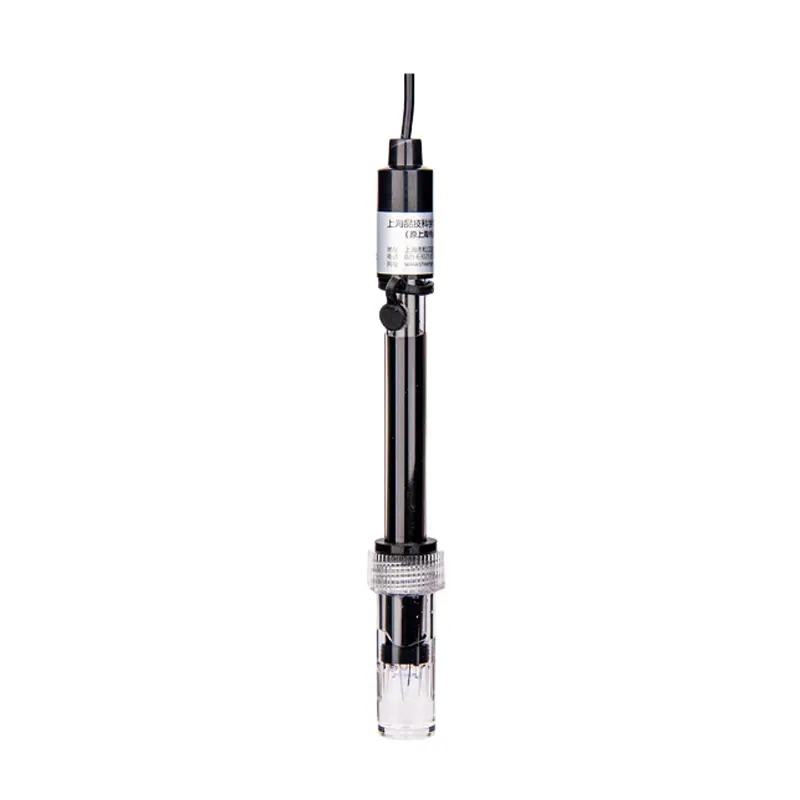
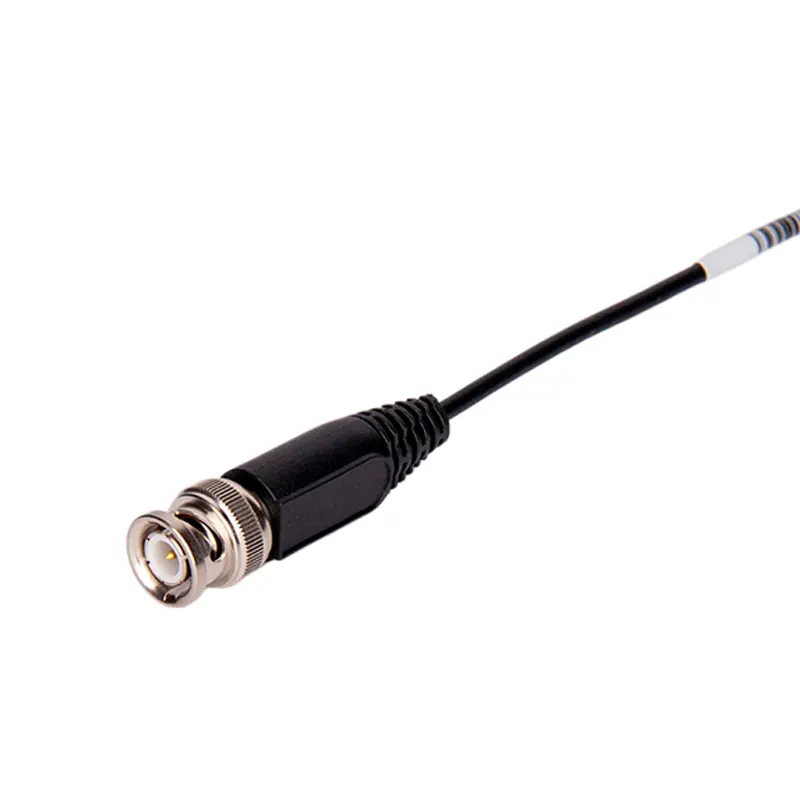
The E-201-C is a refillable composite pH electrode with fiber junction and 3.0 mol/L KCl fill solution, covering pH 0–14 with 0.01 pH accuracy and 5–60°C temperature range. PC shaft, Φ12×120mm, BNC connector. The refillable design allows periodic replenishment of reference electrolyte, extending service life in demanding sample applications.
The E-201-C composite pH electrode is a refillable combination electrode designed for laboratory pH measurement applications where a maintainable reference system is preferred. Where the E-331D and E-201 use sealed reference electrolyte, the E-201-C uses a refillable 3.0 mol/L KCl fill solution — giving the operator the ability to replenish the reference electrolyte when depleted or contaminated, and to maintain a fresh, stable junction potential throughout the electrode’s working life.
The E-201-C uses a fiber junction — the same junction type as the E-331D — providing fast response, good flow characteristics and resistance to clogging with a wider range of sample types compared to POM junction electrodes. The fiber junction is particularly well suited to samples containing low concentrations of proteins, organic compounds or suspended particles, where a POM junction could become blocked and cause slow or erratic readings.
The refillable design makes the E-201-C a practical choice for laboratories measuring samples that deplete the reference electrolyte faster than normal — such as highly acidic or alkaline samples, samples with high ionic strength, or high-throughput measurement routines where the electrode is in continuous use. With proper maintenance and periodic refilling, the service life of a refillable electrode can be extended well beyond that of a sealed model.
| Model | E-201-C |
| Description | pH Composite Electrode |
| pH Range | 0 – 14 |
| Accuracy | 0.01 pH |
| Shaft Material | PC (Polycarbonate) |
| Fill Solution | 3.0 mol/L KCl (Refillable) |
| Junction Type | Fiber |
| Temperature Range | 5 – 60°C |
| Dimensions | Φ12 × 120 mm |
| Connector | BNC |
Sealed electrodes are more convenient — no maintenance is required and they can be used in any orientation. Refillable electrodes offer the advantage of electrolyte renewal: when the KCl fill solution becomes depleted, contaminated or diluted by sample diffusion, it can be refreshed by refilling through the fill hole. This restores a stable junction potential and can significantly extend the electrode’s working life in applications where the sealed electrolyte of a non-refillable electrode would become exhausted faster. For high-throughput laboratories or applications involving aggressive samples, the E-201-C is a more economical long-term choice.
Remove the rubber fill plug from the side of the electrode body to open the fill hole. Using a syringe or dropper, carefully add fresh 3.0 mol/L KCl solution until the fill level is approximately 1–2cm below the fill hole. Replace the fill plug securely. Before measuring, open the fill hole slightly (leave the plug partially open or removed) to maintain a positive pressure head that ensures electrolyte flow through the junction. Rinse the electrode with distilled water and recalibrate before use.
Both have the same pH range, accuracy, temperature range and dimensions. The E-201-C uses a refillable 3.0 mol/L KCl reference with a fiber junction; the E-201 uses a sealed reference with a POM junction. The fiber junction of the E-201-C provides faster response and better performance with a wider range of sample types. The POM junction of the E-201 is appropriate for clean, standard aqueous samples and requires no maintenance. Choose the E-201-C when working with complex or demanding samples, or when extended electrode service life through refilling is a priority.
Use 3.0 mol/L KCl solution for refilling the E-201-C. Skill Scientific electrode replenishment solution (3 mol/L KCl, available as a separate accessory) is formulated specifically for this purpose. Do not use distilled water, tap water or other salt solutions, as incorrect electrolyte concentration will destabilise the junction potential and affect measurement accuracy.
For short-term storage, keep the fill hole open by leaving the fill plug loose, and store the electrode tip immersed in 3.0 mol/L KCl solution or pH 4.00 buffer. Ensure the electrode body remains upright so the KCl fill solution is in contact with the junction. For longer-term storage, close the fill plug to prevent evaporation and store upright with the protective cap in place containing a small amount of KCl solution. Before returning to service after storage, refill if the level has dropped and allow the electrode to equilibrate in buffer solution before calibrating.
Yes. The E-201-C uses a standard BNC connector and meets standard composite pH electrode specifications. It is compatible with most laboratory pH meters from all major manufacturers that accept standard BNC composite pH electrodes.
Before You Go — Get a Free Quote