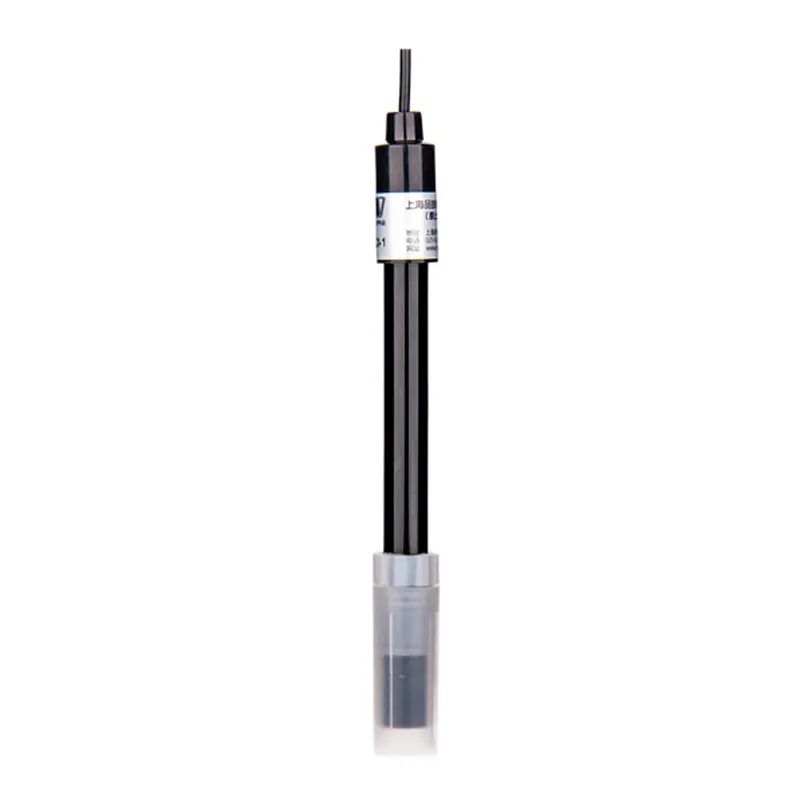
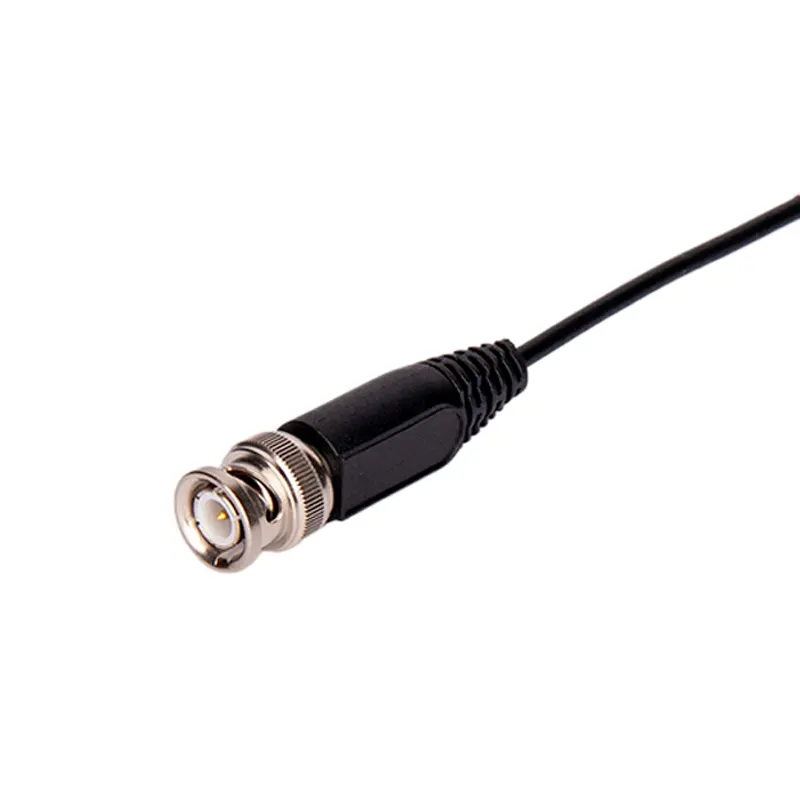
The PCL-1 is a chloride ion indicator electrode with acrylic shaft, measuring range 10⁻¹ to 5×10⁻⁵ mol/L Cl⁻, temperature range 5–45°C. Dimensions Φ12×120mm, BNC connector. Must be used with a compatible reference electrode.
The PCL-1 chloride ion indicator electrode is a potentiometric half-cell electrode designed for accurate measurement of chloride ion (Cl⁻) concentration in aqueous solutions. The ion-selective membrane at the electrode tip generates a potential proportional to the logarithm of chloride ion activity in the sample, which is read by a connected ion meter and converted to a Cl⁻ concentration or pCl reading.
As an indicator electrode, the PCL-1 must be paired with a compatible reference electrode to complete the electrochemical measurement circuit. The acrylic (PMMA) shaft provides lightweight, impact-resistant construction suitable for routine laboratory handling, and the BNC connector ensures compatibility with standard ion meters.
The PCL-1 is widely used for chloride ion measurement in drinking water and environmental water quality monitoring, food and beverage quality control, pharmaceutical analysis, industrial process water and wastewater testing, and soil and agricultural water analysis.
| Model | PCL-1 |
| Description | Chloride Ion Indicator Electrode |
| Measuring Range | 10⁻¹ ~ 5×10⁻⁵ mol/L |
| Temperature Range | 5 – 45°C |
| Shaft Material | Acrylic (PMMA) |
| Fill Solution | — |
| Dimensions | Φ12 × 120 mm |
| Connector | BNC |
No. The PCL-1 is an indicator electrode and must be used with a compatible reference electrode to complete the measurement circuit. Without a reference electrode, the ion meter cannot obtain a stable, measurable potential difference from the sample.
The PCL-1 is used for chloride ion measurement in drinking water compliance testing, environmental surface water and groundwater monitoring, food and beverage chloride content determination, pharmaceutical product quality control, industrial process and cooling water analysis, wastewater monitoring and soil extract analysis.
Chloride ion selective electrodes can be affected by other halide ions — particularly iodide (I⁻) and bromide (Br⁻), which may interfere at concentrations comparable to or higher than the chloride concentration. Sulphide ions (S²⁻) can also cause interference and should be removed or masked before measurement. For complex sample matrices, consult the electrode selectivity data and apply appropriate sample pretreatment.
Rinse the electrode tip with distilled water before and after each use. Store dry in a clean, covered container when not in use — the PCL-1 does not require immersion in storage solution. If the electrode response becomes slow or erratic, clean the membrane surface gently with a soft cloth or fine polishing paper, rinse thoroughly with distilled water and recalibrate before use.
Acrylic (PMMA) is used for the PCL-1 shaft because it is lightweight, impact-resistant and chemically compatible with the chloride-selective membrane material. Unlike glass-bodied electrodes which can break with impact, the acrylic shaft is more durable for routine laboratory handling. Glass shafts are typically reserved for electrodes requiring the inertness and rigidity of glass, such as pH and fluoride electrodes using glass or crystal membranes.
Before You Go — Get a Free Quote