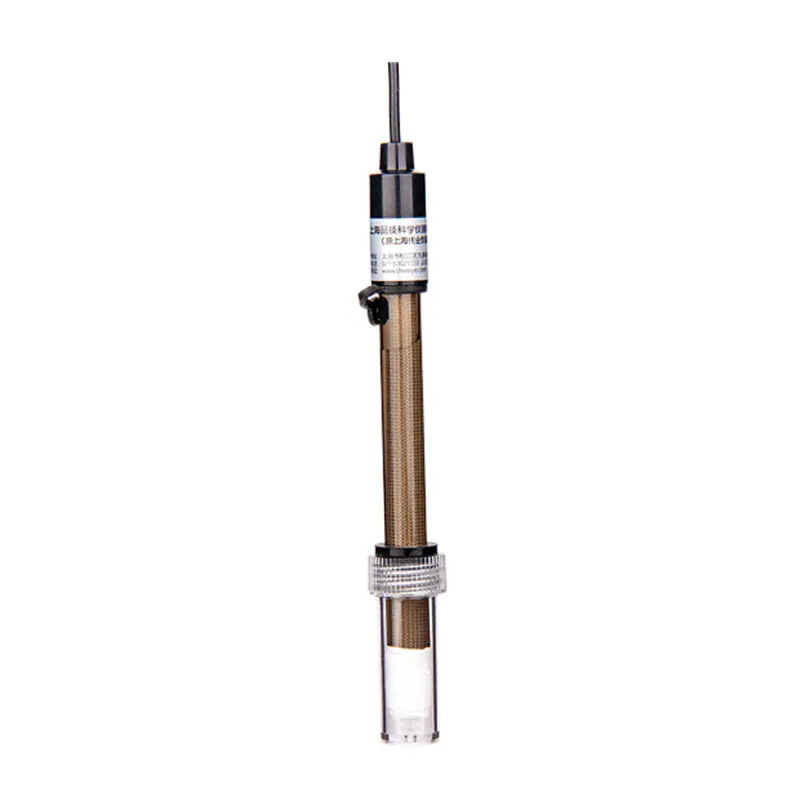
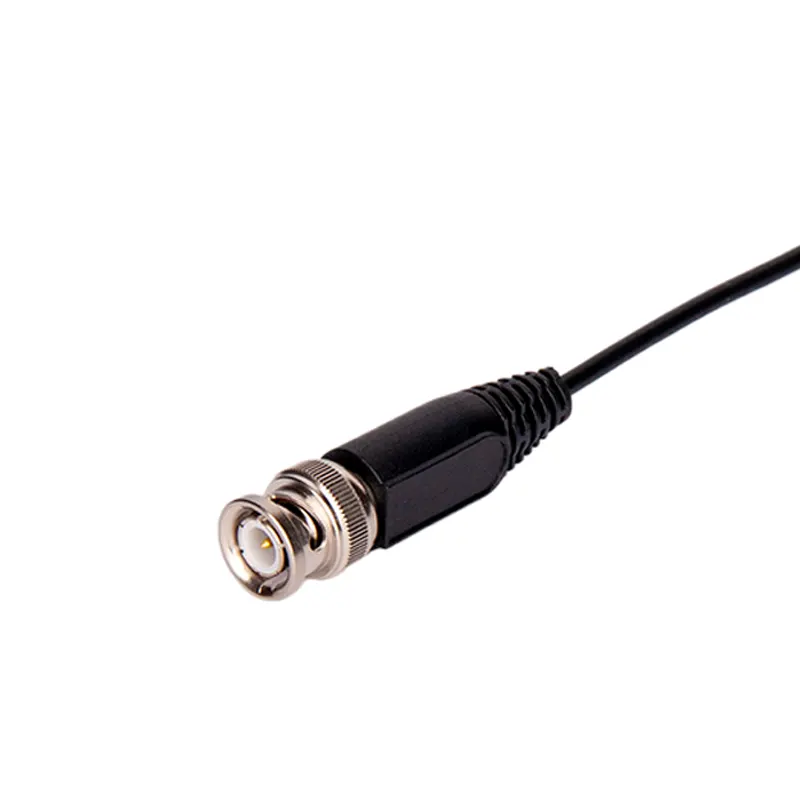
The PF-1 is a fluoride ion composite electrode combining fluoride-sensitive lanthanum fluoride crystal membrane and reference system in one body. Measuring range 10⁻¹ to 10⁻⁶ mol/L F⁻, temperature range 5–45°C. Glass shaft Φ12×120mm, 3.0 mol/L KCl fill solution, BNC connector. No separate reference electrode required.
The PF-1 fluoride ion composite electrode is a combination electrode that integrates the fluoride-sensitive measuring element and the reference electrode into a single glass body. Built around a lanthanum fluoride (LaF₃) crystal membrane — the standard and most selective membrane material for fluoride ion measurement — the PF-1 delivers accurate, stable fluoride ion readings across a wide concentration range of 10⁻¹ to 10⁻⁶ mol/L F⁻.
As a composite electrode, the PF-1 requires no separate reference electrode, simplifying the measurement setup and reducing the number of connections required compared to an indicator electrode configuration. The 3.0 mol/L KCl fill solution provides a stable reference junction, and the glass shaft (Φ12×120mm) offers good chemical resistance across the aqueous sample types encountered in fluoride analysis.
With a temperature operating range of 5–45°C, the PF-1 is suited to a wide range of laboratory conditions. It is the recommended electrode for use with Skill Scientific fluoride ion meters and is widely applied in environmental water analysis, food and beverage safety testing, pharmaceutical quality control, agricultural soil and water monitoring and chemical industry applications where fluoride concentration must be accurately determined.
| Model | PF-1 |
| Description | Fluoride Ion Composite Electrode |
| Measuring Range | 10⁻¹ ~ 10⁻⁶ mol/L |
| Temperature Range | 5 – 45°C |
| Shaft Material | Glass |
| Fill Solution | 3.0 mol/L KCl |
| Dimensions | Φ12 × 120 mm |
| Connector | BNC |
The PF-1 is a composite electrode that integrates both the fluoride-sensitive measuring element and the reference electrode in one body — no additional reference electrode is required. The PF-1-01 is an indicator electrode (half-cell) that requires a separate reference electrode to complete the measurement circuit. Both use a lanthanum fluoride crystal membrane and cover the same 10⁻¹ to 10⁻⁶ mol/L range. Choose the PF-1 for convenient routine measurement; choose the PF-1-01 when a two-electrode configuration is preferred or required by your measurement protocol.
Lanthanum fluoride (LaF₃) is the material of choice for fluoride ion selective electrodes due to its exceptional selectivity for F⁻ ions over most other common anions. The crystal structure of LaF₃ allows fluoride ions to migrate through the membrane while blocking most interfering species, providing reliable, accurate readings across the full 10⁻¹ to 10⁻⁶ mol/L range. The main interfering ion is hydroxide (OH⁻) at high pH — measurement is typically performed at pH 5–6 using TISAB buffer to minimise this effect.
TISAB (Total Ionic Strength Adjustment Buffer) is a reagent commonly added to fluoride samples before measurement. It serves three purposes: adjusting the ionic strength of the sample to match calibration standards, buffering the pH to the 5–6 range where fluoride activity is optimal and hydroxide interference is minimised, and releasing fluoride from complexes with aluminium and iron that would otherwise give a falsely low reading. For most accurate results, TISAB is recommended when measuring environmental and industrial fluoride samples.
The PF-1 is used for fluoride measurement in drinking water and environmental water compliance testing, food and beverage safety analysis, pharmaceutical fluoride content determination, agricultural irrigation water and soil extract monitoring, industrial process water and wastewater quality control, and chemical industry fluoride analysis.
Keep the fill hole open during measurement. Rinse the electrode tip with distilled water before and after each use. Check the KCl fill level periodically and replenish with 3.0 mol/L KCl solution as needed. Store upright with the fill hole closed and electrode tip immersed in 3.0 mol/L KCl or a dilute fluoride standard solution. Do not allow the lanthanum fluoride crystal membrane to dry out — if it becomes dry, rehydrate by soaking in a fluoride standard solution before use. Avoid mechanical contact with the crystal membrane surface.
Before You Go — Get a Free Quote